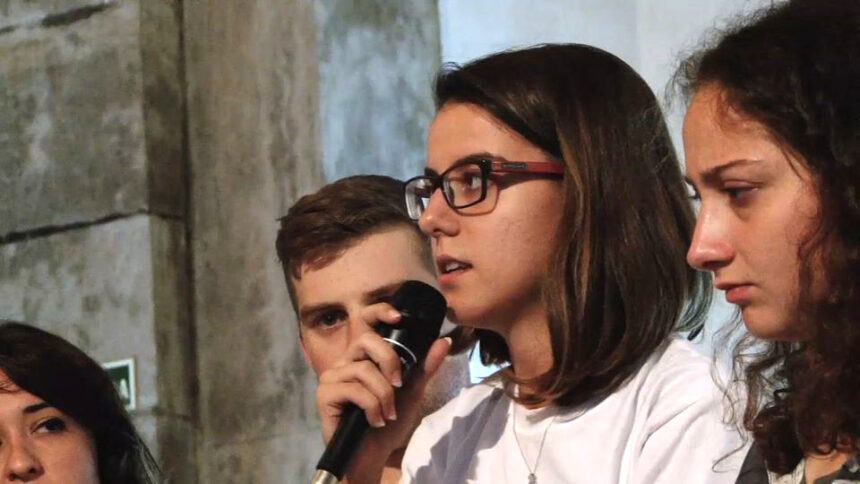
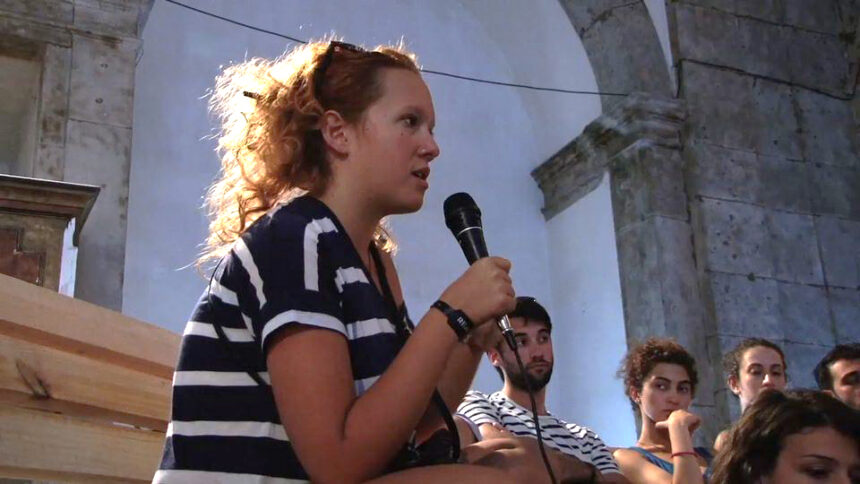
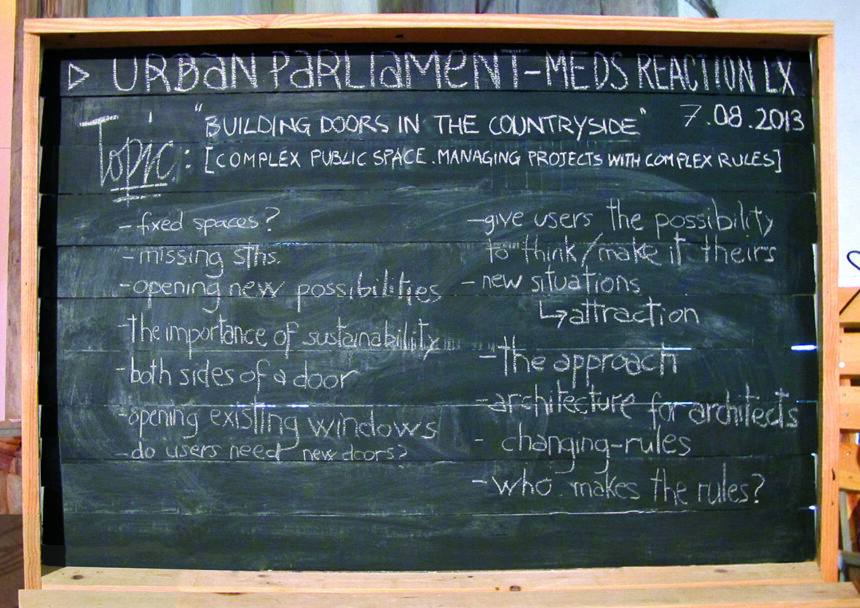
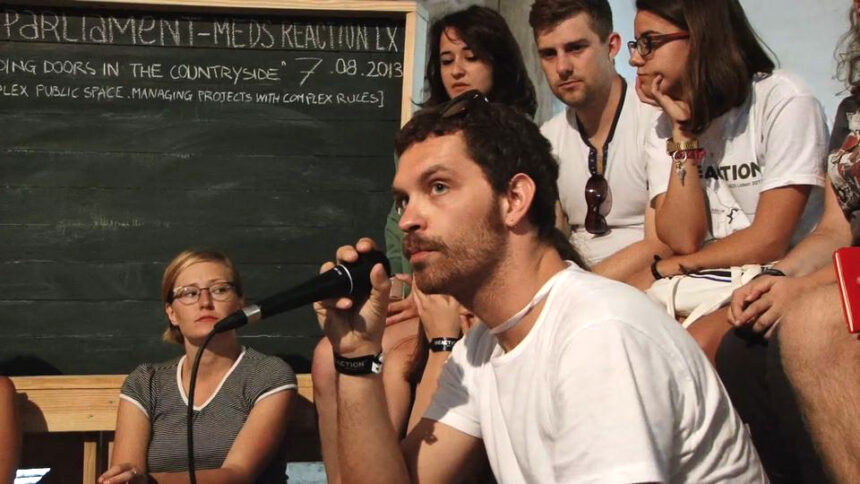
The topic of “building doors” opened a discussion about intervention in difficult places and complex realities. A door was not understood only as a physical element, but as a metaphor for access, invitation and the possibility of imagining a different relationship with a place.
Participants questioned the habit of designing from general ideas rather than from people’s needs. Sometimes a project enters a street or a territory that does not clearly ask for intervention. The challenge is to know whether something is needed, whether people can imagine change, and whether the designer has knocked on the right door before acting.
One example discussed was a seaside city without a real relationship to the sea. In that case, even starting a conversation about how people relate to the sea was already a way of building a door. The project was not only the object to be built, but the process that allowed people to think differently about their own environment.
The session also raised the question of sustainability after the designers leave. If an Urban Parliament, chair or structure is placed in a square, how can anyone ensure that people will use it as intended? Participants suggested that the community may change the rules, invent new uses or transform a chair into something else entirely. That is not necessarily failure. The worst outcome is not misuse, but non-use.
The strongest learning was that people should make the rules, and designers should follow them when creating objects. If communities define the rules of use, they are less likely to “break” them, because the space already belongs to their own imagination.
Key ideas
Situation: The session starts from the metaphor of building doors in complex places.
Tension: Designers may create possibilities, but communities may use them in unexpected ways.
Learning: Sustainability depends less on controlling use and more on enabling appropriation.
Return: Design as an open invitation: build structures that communities can reinterpret, govern and make their own.
Urban beings and roles
Informal residents: build and adapt space when formal systems fail them.
Architects and urbanists: can provide platforms, services and safety without erasing agency.
Municipalities: carry responsibility for risk, infrastructure and public welfare.
Construction knowledge: circulates through communities, materials and shared techniques.
Global markets: shape choices, from self-building to standardised furniture and design.
Rights to introduce
- Right to participate in the making of one’s environment. People should be able to shape spaces that concern them.
- Right to open construction knowledge. Techniques and processes can be shared, learned and improved.
- Right to basic services in self-made urban areas. Water, electricity and sanitation are not optional.
- Right to safe adaptation. Community agency should be supported with structural and public safeguards.
Rights or situations to eradicate
- Eradicate the romanticisation of unsafe informality. Agency should not mean living without services or protection.
- Eradicate planning that is too slow for real needs. Urban systems must respond to changing populations.
- Eradicate empty “free space” without support. Freedom needs platforms, not abandonment.
- Eradicate the monopoly of a few designers over everyday life. People still shape their realities in different ways.
Rights to protect
- Protect the power to shape one’s own environment. Choice is part of urban life.
- Protect local and global construction knowledge. Bamboo, self-building, repair and adaptation all carry intelligence.
- Protect public responsibility for safety. Participation must not remove institutional duties.
- Protect plurality of urban choices. Some people want to build, others want to buy, others want to participate partially.
Voices from the Parliaments
Voice of the self-made city. A voice that recognises how people occupy, complete and adapt unfinished structures.
Voice of the responsible municipality. A voice concerned with fire, collapse, risk and public duty.
Voice of the invisible platform. A voice arguing that architects should create conditions for others to safely complete and transform space.