Espacio Bellas Vistas is a neighbourhood cultural association rooted in Bellas Vistas and other parts of Tetuán, Madrid. It builds community through everyday activities and acts as a meeting point for neighbourhood groups and local initiatives.
Uncategorized
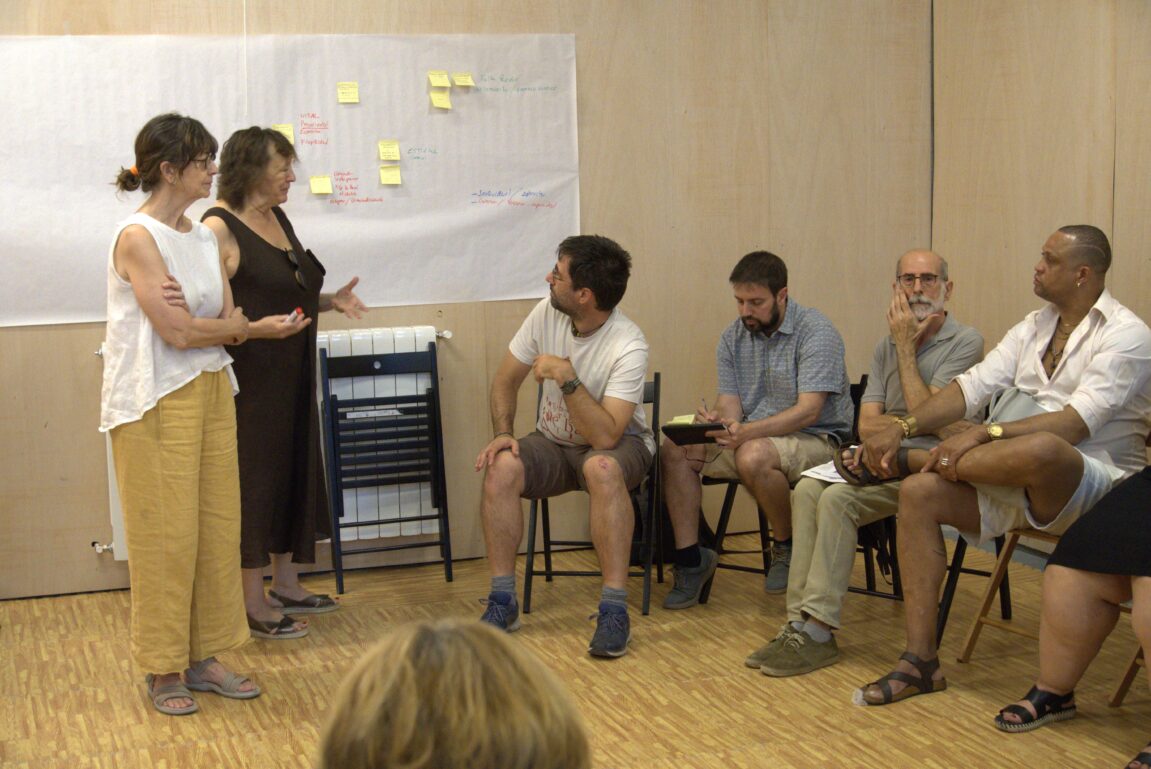
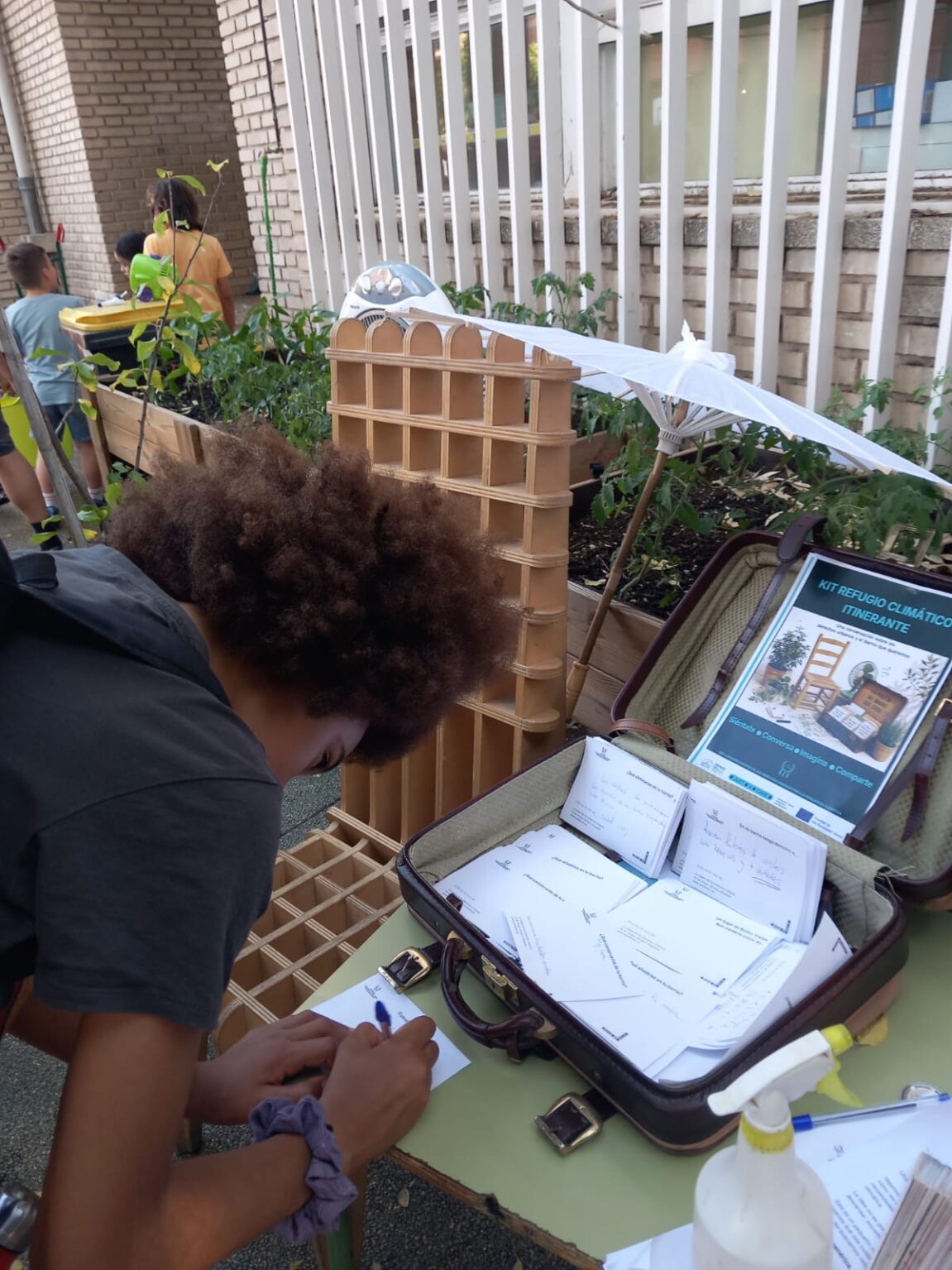
What can a chair, some shade and a handful of questions tell us about climate justice? At CEIP Ignacio Zuloaga in Bellas Vistas, Madrid, the first stop of the Climate Shelter Kit began with everyday questions: Where do we look for shade? What do we miss when it gets hot? What should we protect in […]
A kit for setting up school parliaments to shape the next generation of change-makers

Lisboa / Portugal
Warehouse is an architecture and art collective founded in 2013. Partners: Meds Reaction Lx, Collaborators: Rúben Teodoro, Ricardo Morais, João Peixe, Diogo Anjos, Anna Buono, Aída Asecas, Nuno Silva and Tiago. http://warehouse.pt/projects/parlamento-urbano-lisboa/
Madrid / Spain / 2024
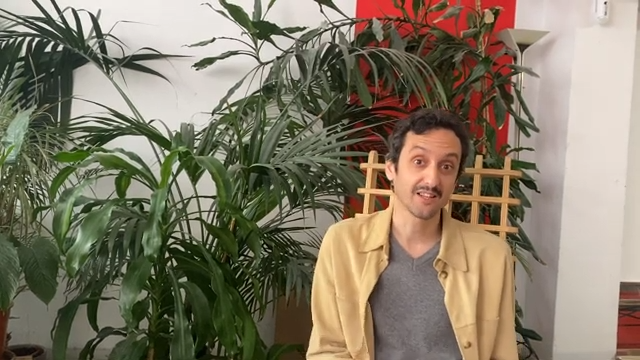
Cities should guarantee green, traffic-calmed and lively neighbourhoods, where reducing traffic makes it possible to recover space for trees, shade, rest, encounter and local commerce. Protecting existing green areas and creating new spaces for climate care should be part of just adaptation, especially in dense neighbourhoods with limited public space.
Cities should guarantee walkable, safe and cared-for urban centres, where reducing traffic, supporting local commerce and maintaining public space are part of just adaptation policy. Walking, resting, shopping nearby, meeting others and remembering shared places are also forms of urban resilience.

#UR_BCN 2012 eme3 International Architecture Festival Barcelona
Lisboa / Portugal / 2013
#UR_LIS 2013 [MEDS_Reaction]
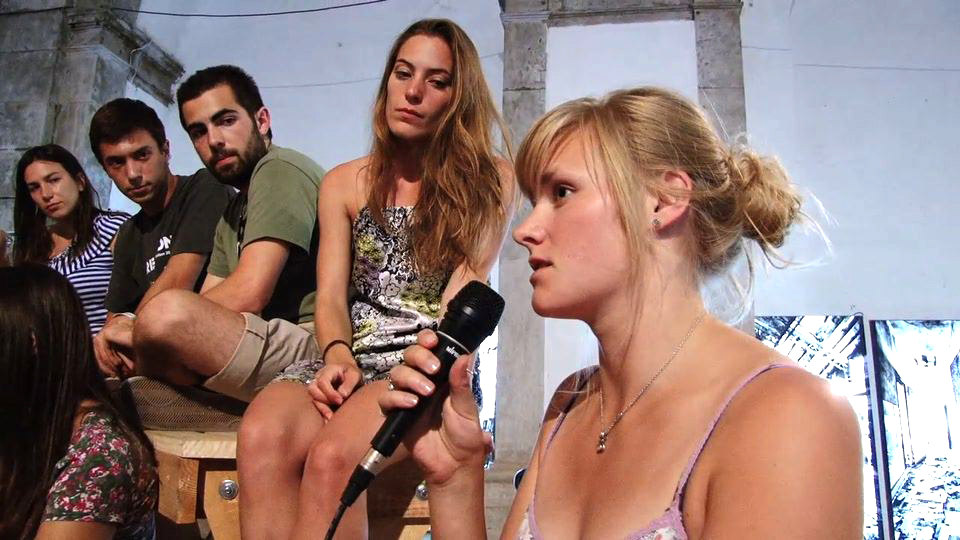
Commons sense: the session redefines common sense as a sense of community, asking how urban life can rebuild local relations in increasingly global cities.
Llanes / Spain / 2016
UR_Yesllanes Llanes Declaration of Rural Rights
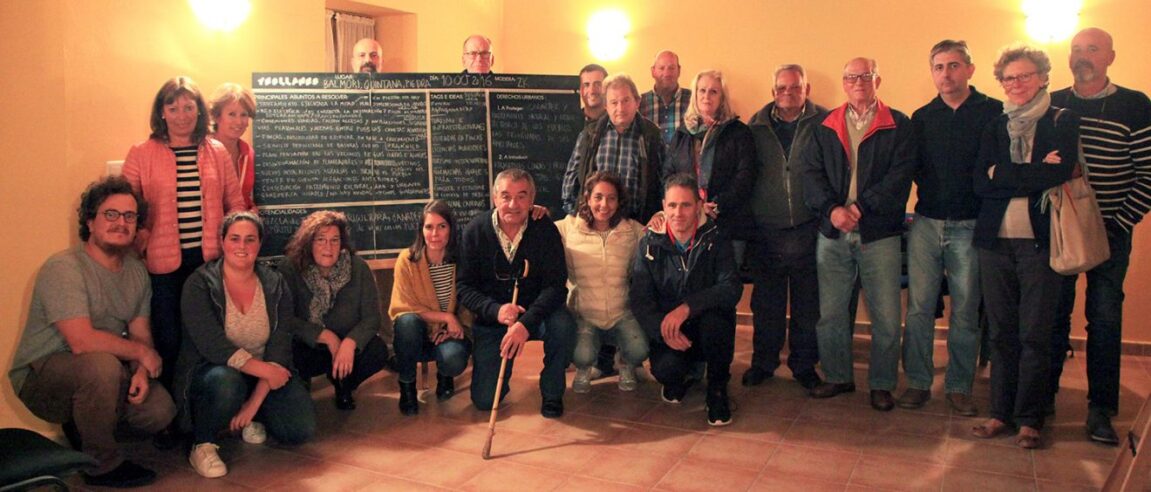
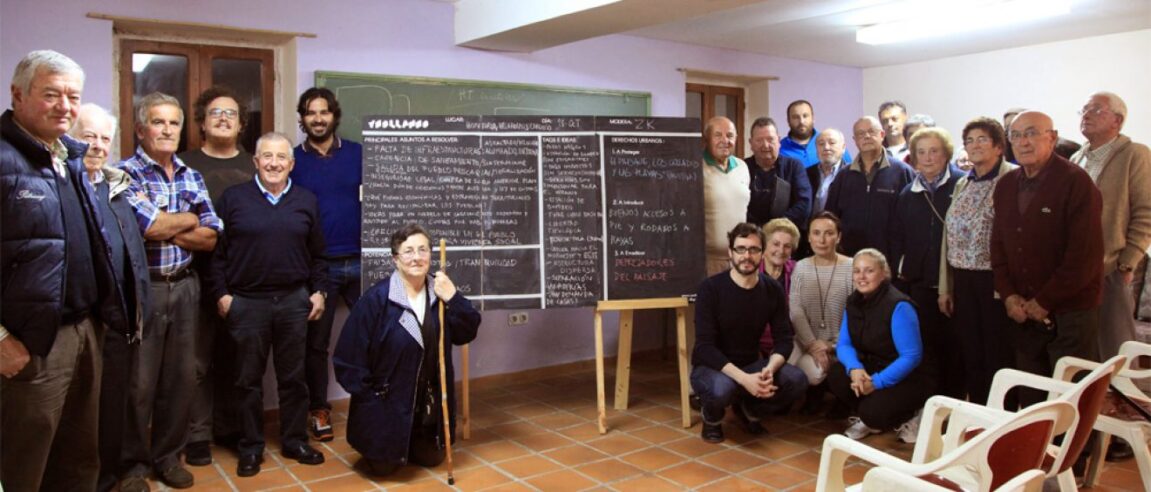
Residentes habituales, reglas iguales y vivienda joven: Quintana, Balmori y Piedra reclaman una planificación que empiece por quienes viven allí.
Llanes / Spain / 2016
UR_Yesllanes Llanes Declaration of Rural Rights
Typologies, evolution and development: Hontoria, Villahormes and Cardoso debate whether to revive the previous model or imagine another future for their villages.
Lisboa / Portugal
#UR_LIS 2013 [MEDS_Reaction]
Madrid / Spain
Grupo de Estudios y Alternativas 21, S.L.
Madrid / Spain / 2011
Local voice on square, slow living, zoning.
Ankara / Budapest / Madrid / Oslo / Roma / Vitoria-Gasteiz / Zagreb / 2025 / 2026 / 2027
Four cities, four local processes, one European Declaration: turning everyday experiences into collective knowledge, emerging urban rights and proposals for just climate adaptation.

Bruxelles / Distributed / Belgique / Europe
Democratic Society is a network of people working to create a democracy that works for the 21st century. We undertake practical projects, conduct research and build new democratic infrastructure that lets people involve themselves in the decisions that shape their lives. Based in Brussels but with offices across Europe, we work to build a democracy […]
Madrid / Spain / 2024
UR_MAD 2024
Cities should guarantee accessible, continuous pavements free from improper occupation, recognising walking as a basic form of mobility, health and urban care. Protecting local commerce and improving pedestrian space should be part of just adaptation policies, because they sustain more liveable, proximate neighbourhoods that are better able to care for everyday life.