
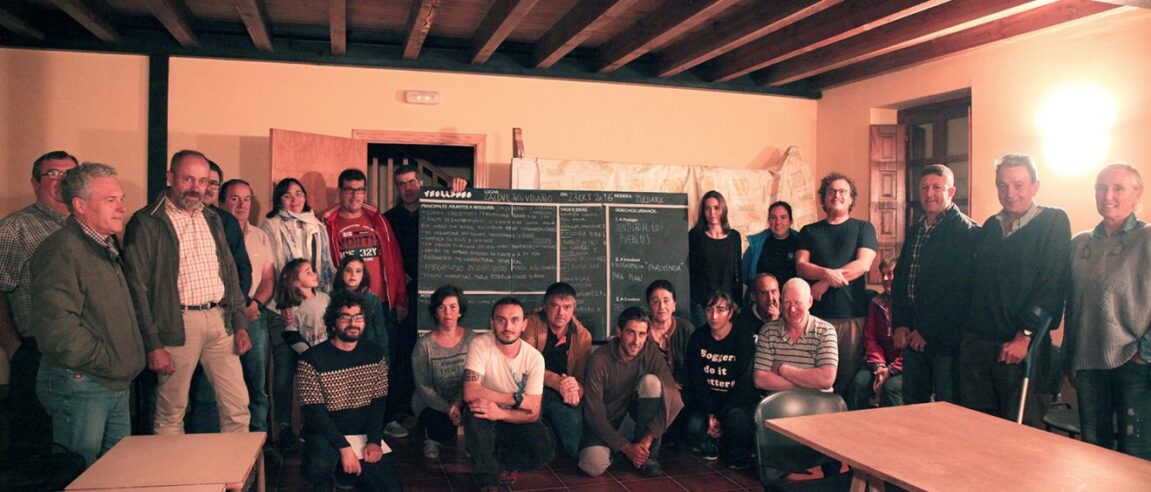
Venue: Escuelas de Caldueñín
Participants: 37 people
Villages invited: Caldueñín, El Mazucu, Villa, Cortines, Buda, Las Xareras, Llaborín, Alcoreda, Debodes, Llanuamieva, Vibañu, El Casar and Riufriu.
Note: Vibaño joined the Caldueño Valley meeting for last-minute technical reasons.
The session held at the Escuelas de Caldueñín brought together residents from several villages in Caldueño Valley, together with Vibaño, which joined the meeting for last-minute technical reasons. The conversation focused on a shared concern: how to keep the valley active in a context where part of the population lives from tourism, many residents are retired, and everyday life also depends on people from outside coming to, or remaining in, the area.
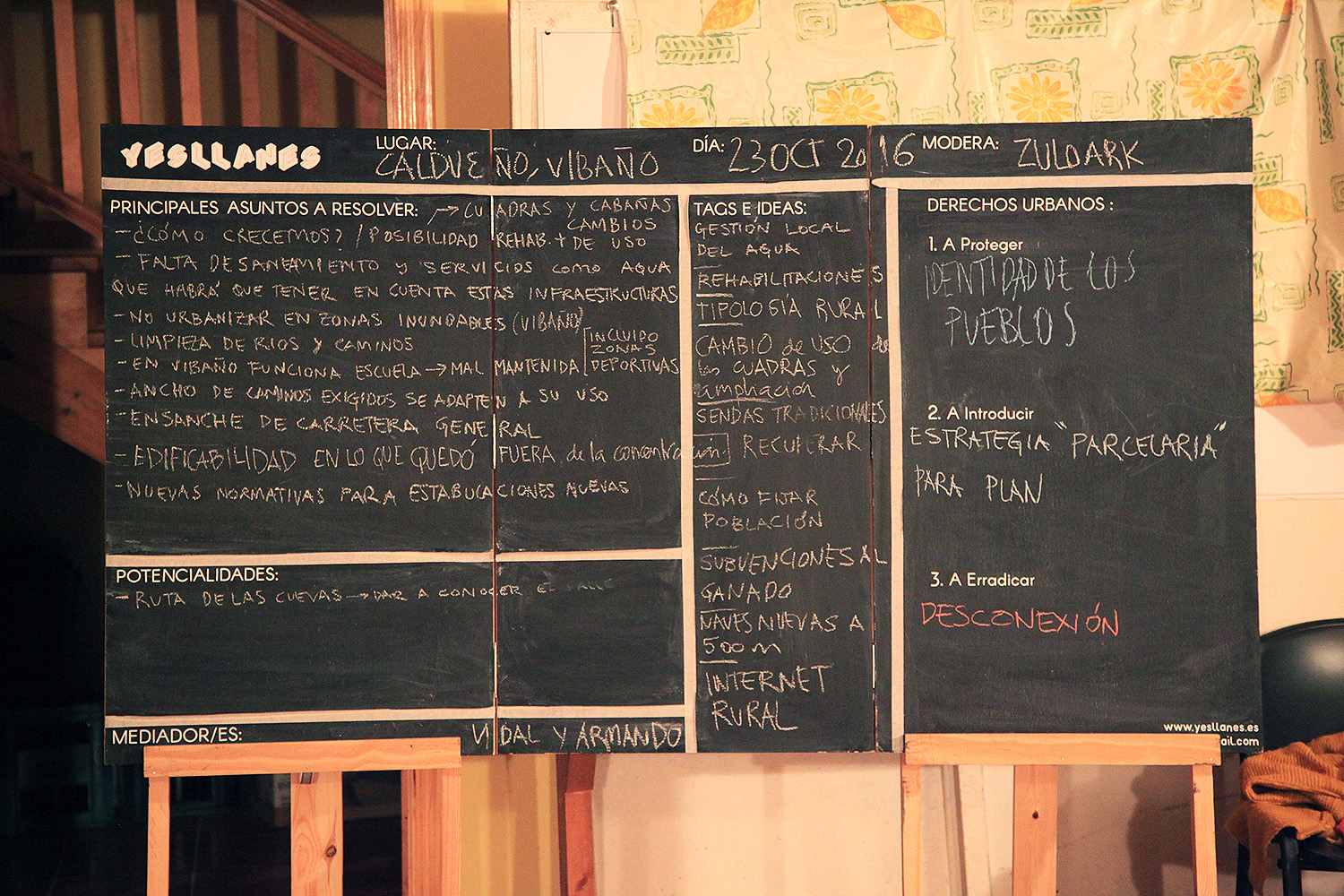
A clear tension emerged between expectations around land use and current limitations. Some participants expressed frustration at not being able to build on plots where the previous planning framework seemed to allow that possibility. This was not raised only as an individual concern, but as part of a broader question: how to make it possible for the territory to remain inhabited, cared for and economically viable.
From there, the conversation pointed to the need to revitalise the local economy through activities adapted to the rural character of the valley. One of the main proposals was to promote the rehabilitation of cabins, barns and other existing buildings, allowing new uses that could help sustain activity without disrupting the scale of the place.
Participants also mentioned the possibility of enabling new small-scale livestock farming, self-consumption activities and tourism alternatives compatible with life in the valley. To make this possible, they argued that more flexible regulations would be needed — rules capable of recognising the real conditions of these villages, rather than applying criteria designed mainly for urban or more consolidated contexts.
Another demand concerned the possibility of building on land that had been left outside the land consolidation process. This connects with the wider debate on how rural land is regulated, and what room families and residents have to develop life projects, housing or economic activity on their own plots.
In the case of Vibaño, specific issues were added regarding river cleaning and construction in flood-prone areas. Needs related to changes of use and the adaptation of roads and tracks were also raised. These issues introduce a dimension of safety, maintenance and territorial management: the question is not only whether new uses should be allowed, but how to allow them while taking water, access and existing risks into account.
The proposal that emerges from the session is to think about the future of the valley through a combination of rehabilitation, small-scale economic activity, compatible tourism, territorial maintenance and regulations better adjusted to rural realities. The underlying question is not only what can be built, but how to prevent the valley from losing population, activity and its capacity to be cared for.
Key ideas
Situation: Caldueño Valley brings together villages with an ageing population, tourism-related activity and the need to attract or retain people who can help sustain life in the territory.
Tension: Urban planning and land-use restrictions clash with local expectations, rehabilitation needs and opportunities for local economic activity.
Learning: Rural revitalisation needs to combine the rehabilitation of existing buildings, small-scale livestock farming, self-consumption, compatible tourism and regulations adapted to the scale of the valley.
Return: The session provides a basis for reviewing how planning can support life, activity and territorial maintenance, without ignoring risks such as flood-prone areas, river cleaning or the adaptation of roads and tracks.
Participants and roles
Residents of the invited villages: contribute everyday knowledge about housing, plots of land, roads and tracks, rivers, economic activity and the need to remain in the valley.
Retired residents: express the importance of maintaining population, services and activity so that the valley does not lose its social life.
People linked to tourism: show the importance of tourism as a source of income, while also pointing to the need to diversify it through alternatives compatible with the rural environment.
Owners of plots or rural buildings: raise expectations and obstacles related to construction, rehabilitation and changes of use.
Vibaño: introduces specific issues concerning rivers, flood-prone areas, roads and tracks, and technical planning conditions.