
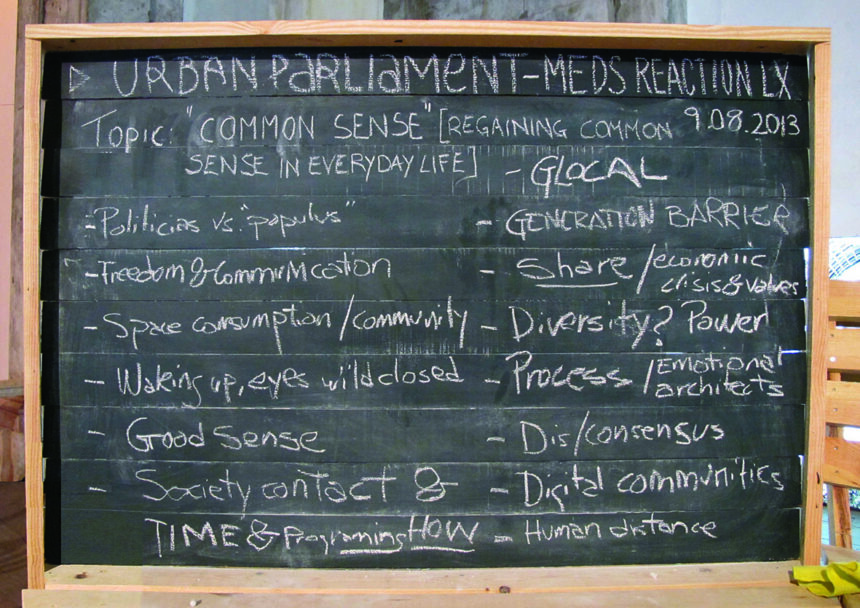
The session opened with a deceptively simple idea: common sense. Participants quickly showed that the term is unstable. What seems obvious or correct to one group may be strange or unacceptable to another. Common sense is cultural, situated and shaped by shared codes.
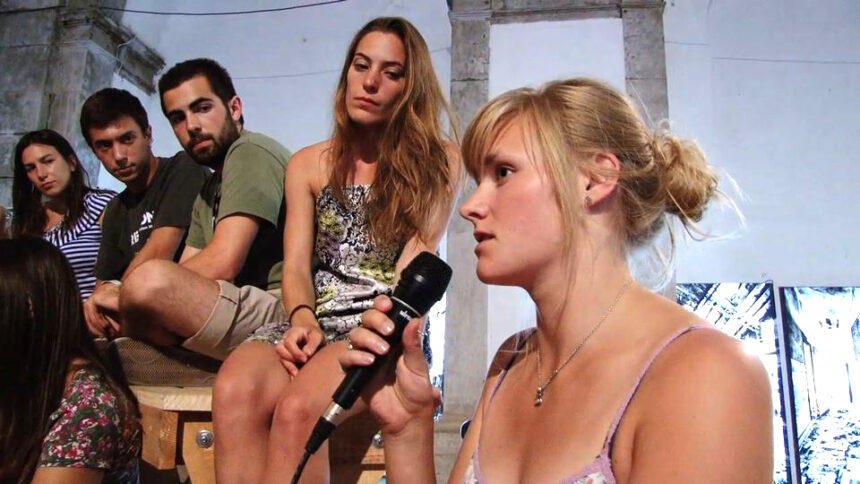
Some voices described people as influenced by markets, propaganda and poor decision-making. Others resisted this pessimistic view and questioned whether “common sense” should really mean “good sense”. The conversation then moved towards a more productive idea: common sense as sense of community.
This shift changed the session. The issue was no longer whether people make correct choices individually, but how people build relations, understand each other and take responsibility for the places they share. Community does not appear automatically. It needs contact, time, invitations and small catalysts.
Participants discussed how global urban life can weaken local relationships. People may be more connected to distant friends through the internet than to their own neighbours. The challenge is not to reject digital life, but to reintroduce locality into urban experience.
One example was a community garden started by a few people who put up posters, cleared space and invited others to join. The learning is that people may already care about their community, but often need a small trigger to realise that others care too.
Key ideas
Situation: The session starts from common sense as a shared cultural norm.
Tension: In diverse and global cities, there is no single common sense.
Learning: A stronger concept is sense of community: the ability to build relations and responsibility around shared places.
Return: Use small catalysts, invitations and local initiatives to rebuild community ties in urban life.
Urban beings and roles
Neighbours: are potential co-producers of community, even when disconnected.
Taxi drivers and everyday workers: reveal how ordinary perceptions shape urban awareness.
Digital communities: extend social life but may weaken local attachment.
Community catalysts: posters, gardens, meals or conversations can activate shared care.
Reaction participants: act as external catalysts with an insider attitude.
Rights to introduce
- Right to community catalysts. Small actions can help people recognise shared responsibility.
- Right to rebuild local relations. Cities need conditions for neighbours to meet and cooperate.
- Right to participate in everyday urban care. Community is built through practical involvement.
- Right to plural common senses. Diverse groups should be able to negotiate shared norms.
Rights or situations to eradicate
- Eradicate urban indifference. People should not be disconnected from their own neighbourhoods.
- Eradicate the idea of one universal common sense. Cities contain multiple cultures and readings.
- Eradicate participation without inhabitants. Improving a place without its community makes little sense.
- Eradicate isolation behind walls. Urban life needs invitations to come out, meet and act.
Rights to protect
- Protect locality in global cities. Global connection should not erase neighbourly relations.
- Protect small community initiatives. Gardens, meals and informal invitations can transform urban life.
- Protect diversity of values and cultures. Common life must be negotiated, not imposed.
- Protect emotional architecture. Spaces matter because they carry relationships, memory and care.
Voices from the Parliaments
Voice of sense of community. A voice that transforms common sense from a norm into a shared responsibility.
Voice of the local catalyst. A voice that shows how a small action — a poster, a garden, a dinner — can restart community life.
Voice of glocal tension. A voice reflecting on how people can be globally connected but locally disconnected.
Convening category: Regaining common sense in everyday life.
Main emergent category: From common sense to sense of community.
Secondary categories: Locality, community, glocal cities, public responsibility, social ties, small catalysts, everyday participation.
Session type: Conceptual and community-oriented session