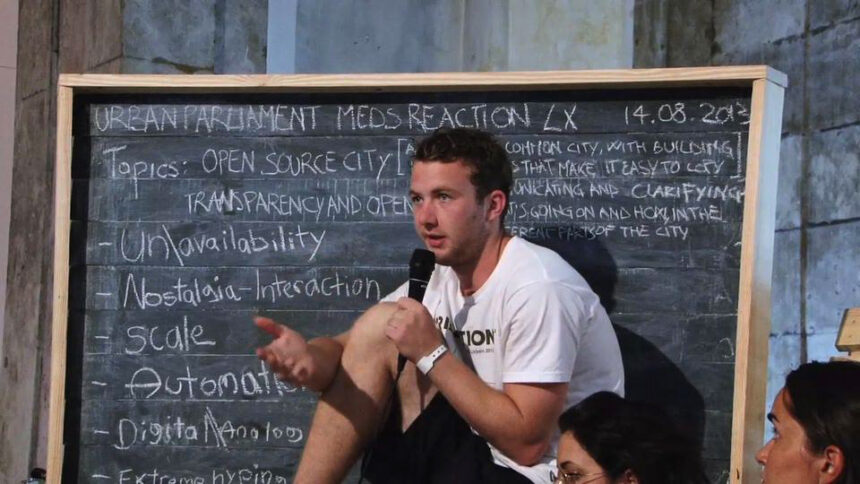
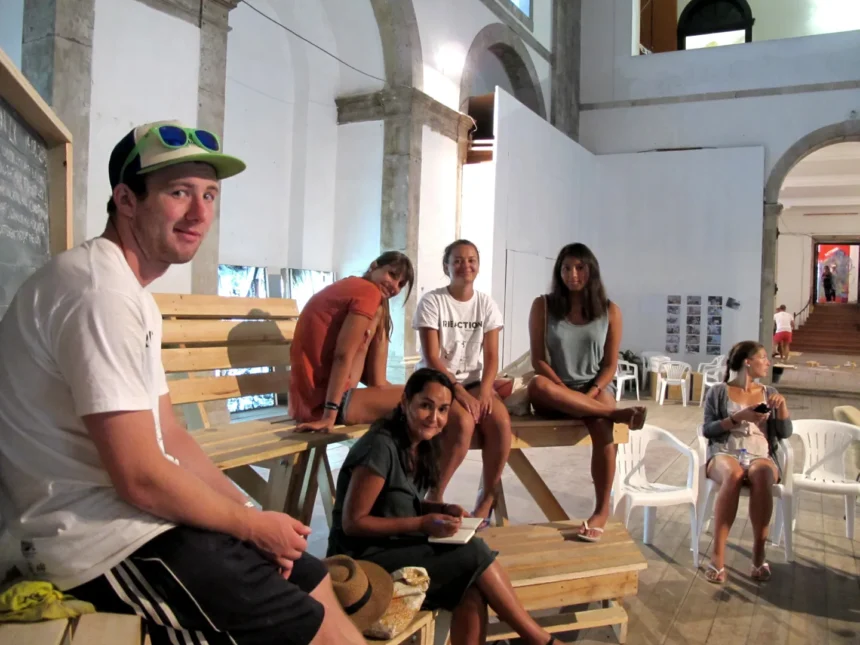
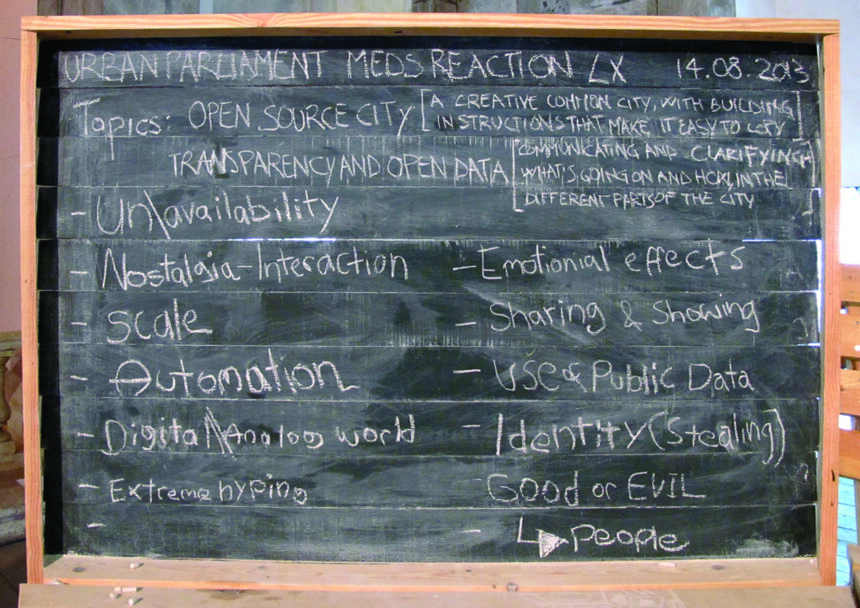
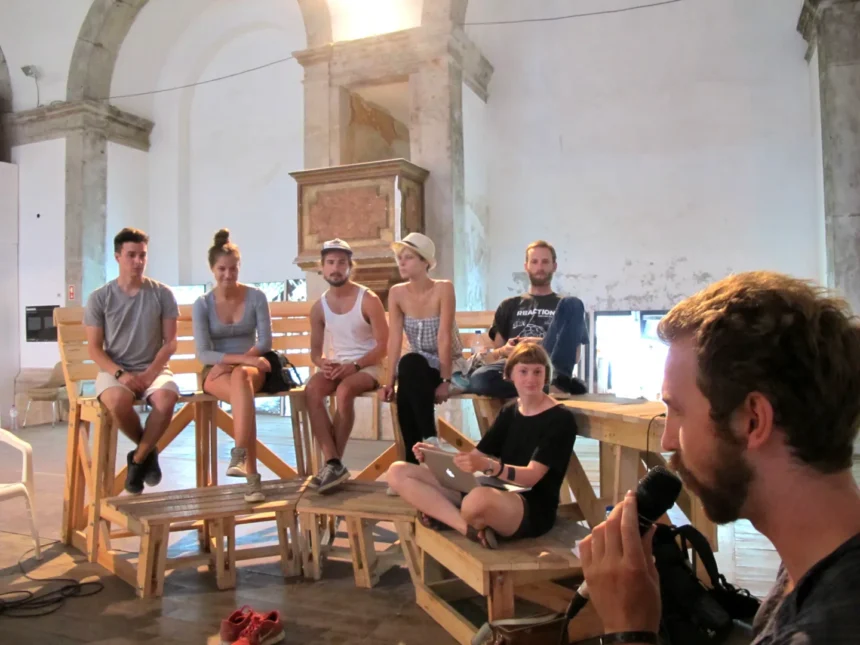
Transparency and Open Data / Open Source City [MEDS_Reaction S.8]
Open source city: the session asks what happens when urban data, designs and decisions become accessible, and why information still needs context, interpretation and local knowledge.
The session began from the language of open source, transparency and open data. Participants discussed how access to information — about buildings, methods, urban life, interactions or design processes — changes the way people design and understand cities.
Digital tools such as virtual city models were recognised as useful. They allow designers to study a place remotely, understand proportions, model streets and access building information. But the session quickly identified a risk: relying on digital information without visiting the place can produce poor design. A virtual model may show the shape of a building, but not why it was built in a certain way or how it is lived.
The value of design was also questioned. If blueprints, theories and data become open source, what remains of the designer’s work? Participants suggested that drawings alone do not contain the full reasoning behind a project. Open access does not automatically produce understanding.
Open data was seen as powerful when linked to public decisions and social realities. If decisions are publicly available, processes become more transparent. If demographic or income data is accessible, public spaces can be designed for the people who actually use them and at the times they are available.
At the same time, participants raised a concern about identity. Working through shared networks can help people discover others working on similar problems, but copying without thinking may weaken local specificity. Data itself is not intelligent. It becomes useful only when combined with interpretation, common sense and knowledge of place.
Key ideas
Situation: Urban information, models and design processes are increasingly accessible.
Tension: Open data can improve design, but it can also distance designers from lived context or produce copying without understanding.
Learning: Data needs interpretation, local knowledge and responsibility.
Return: Use open data to support transparent decisions and better design, but never as a substitute for visiting, listening and understanding the place.
Urban beings and roles
Open data: provides access to urban information, but requires interpretation.
Designers and architects: must decide what to open, how to use data and how to protect context.
Local communities: carry knowledge that data cannot fully capture.
Digital tools: support modelling and remote analysis, but can create distance.
Public authorities: can make urban decisions more transparent through open processes.
Rights to introduce
- Right to transparent urban decisions. People should be able to know how and why decisions are made.
- Right to access urban information. Data can support better participation and design.
- Right to contextual interpretation. Information must be explained, not only released. Right to networked learning. Designers and communities should be able to learn from others without erasing local identity.
Rights or situations to eradicate
- Eradicate design based only on remote data. Visiting and understanding place remains necessary.
- Eradicate opaque public decision-making. Urban choices should not be hidden.
- Eradicate copying without context. Open source should not become repetition without identity.
- Eradicate the idea that data is intelligent by itself. Conclusions require human interpretation.
Rights to protect
- Protect local identity. Shared information should not flatten difference.
- Protect the design process as knowledge. Blueprints alone do not explain intentions.
- Protect open networks of learning. Sharing can prevent isolation and duplication.
- Protect place-based understanding. Data must meet lived experience.
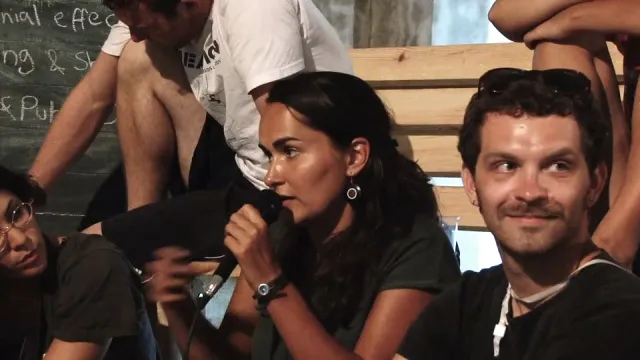
Voices from the Parliaments
Voice of the open-data designer. A voice that sees data as a tool for better, more informed design.
Voice of the place-based sceptic. A voice warning that digital models cannot replace visiting and understanding a site.
Voice of identity in the network. A voice concerned that open-source culture may lead to copying and loss of local specificity.