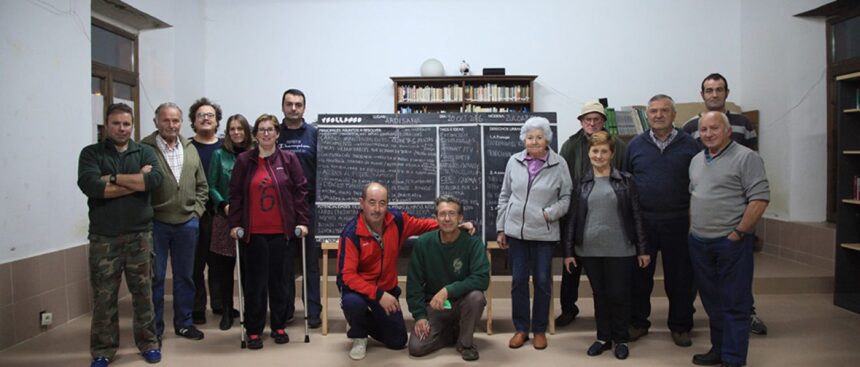
Ardisana Valley
Venue: Escuelas de Ardisana
Participants: 23
Villages invited: Ardisana, Palaciu, Mestas, Villanueva, Telleu, Riucaliente, La Malatería, Gomezán, Los Callejos, La Venta, Rabiaos and Llumedian.
The Ardisana meeting brought together several villages from an area that feels deeply isolated from municipal institutions. Participants described a double difficulty: significant infrastructure shortages and, at the same time, obstacles that make it harder to retain population.
The conversation shows that isolation is not only a matter of physical distance. It also has to do with the lack of services, institutional presence, meeting spaces and opportunities for everyday life to be sustained in small and dispersed villages.
In response, participants proposed a project for mobile health, cultural and social services rotating among the most isolated villages. The idea starts from a concrete reality: it is not always possible to have permanent facilities in every settlement, but it is possible to organise mobile services that bring care, activities and gatherings closer to the population.
These mobile services would help create opportunities for socialisation, strengthen links between villages and make service provision more viable for all parties. The aim would not simply be to bring occasional activities, but to recognise that access to health, culture and social life is also part of the conditions needed to remain in the territory.
Ardisana’s proposal offers a practical way to respond to isolation: rather than waiting for every village to have all facilities, it suggests designing a rotating network that reaches those who are usually furthest from decision-making centres and municipal services.
Key ideas
Situation: Ardisana and the invited villages feel isolated from institutions and face infrastructure shortages.
Tension: Lack of services and facilities makes it harder to retain population, but permanent facilities in every village may not be viable.
Learning: Mobile services can bring health, culture, social care and meeting spaces closer to dispersed villages.
Return: Design a rotating service network that strengthens permanence, social life and institutional presence.
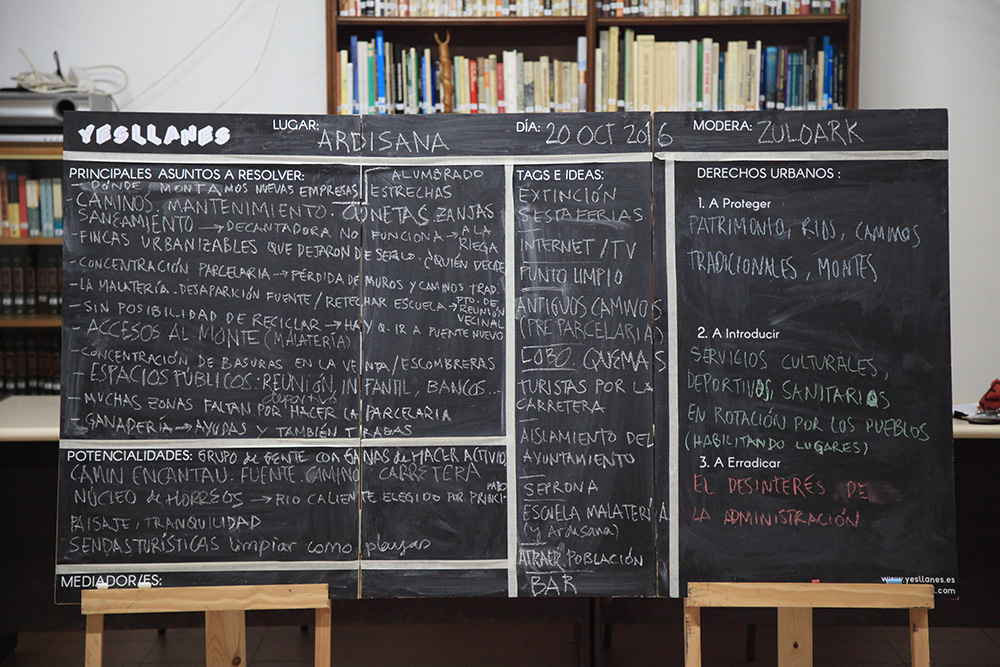
Urban beings and roles
Residents of Ardisana and invited villages: contribute experience of isolation, infrastructure gaps and difficulties in remaining.
Older people or people with reduced mobility: represent the need for nearby and accessible services.
Health, cultural and social care services: appear as potential actors in a mobile network.
Municipal institutions: are addressed as responsible for bringing services and public presence closer.