Vidiago, Riego and Puertas session
Venue: Escuelas de Riegu, 5 October · 19:30 h
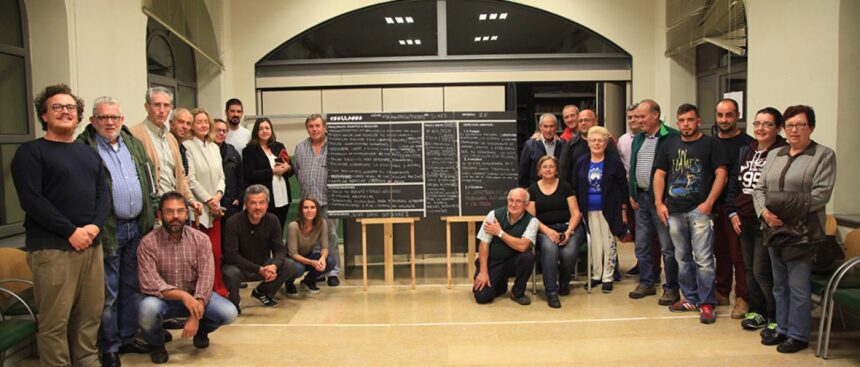
Participants: 35
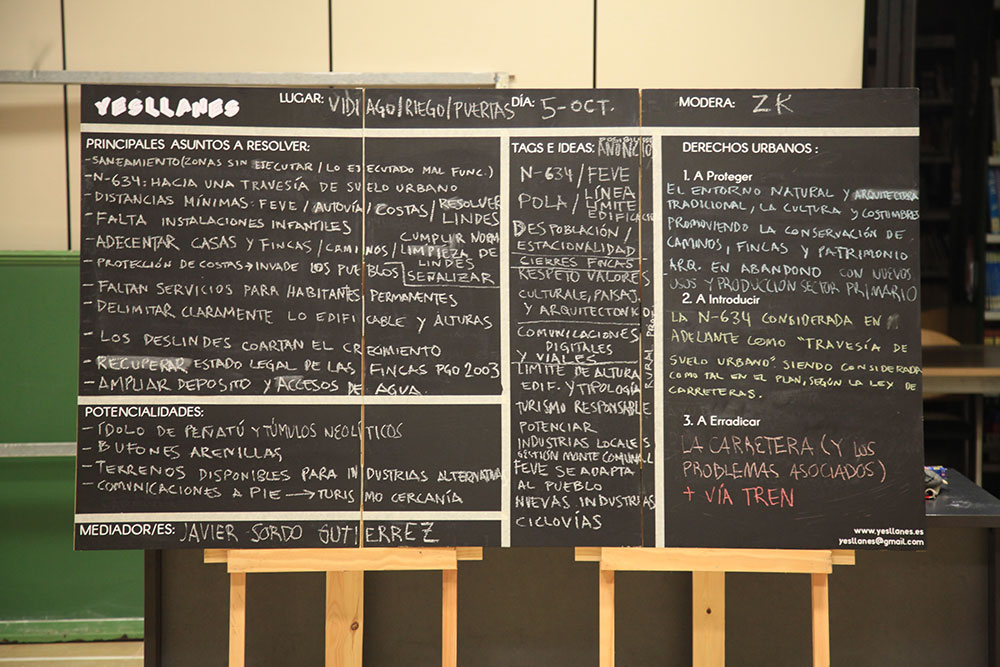
The session in Vidiago, Riego and Puertas was shaped by restrictions derived from major infrastructure and supra-municipal regulations. FEVE, the motorway and coastal protection cross or condition the territory and have limited successive planning proposals.
Participants ask for clarity: which areas will be buildable, with how many floors and why. Uncertainty about the rules reduces capacity for improvement and feeds a sense of blockage.
Alongside the planning dimension, there are deficits in sanitation, water supply, reservoirs, recreation areas, services for permanent residents, digital connections and maintenance of paths and boundaries.
There is also concern about the appearance of abandonment created by neglected plots and architectural heritage. The session proposes not only growth, but care, signage, cleaning and maintenance of what already exists.
Key ideas
Situation: The villages are conditioned by FEVE, the motorway and coastal regulations.
Tension: External infrastructure limits local growth and improvement.
Learning: Planning clarity must be accompanied by maintenance, services and heritage care.
Return: Explain buildability and heights, improve sanitation and water, and promote the N-634 as an urban crossing where appropriate.
Urban beings and roles
Permanent residents: call for services and recreation areas.
National infrastructure: FEVE and the motorway condition local life.
Supra-municipal administrations: influence the future through coastal and transport regulations.
Architectural heritage and plots: appear as elements to recover from abandonment.
Rights to introduce
Right to know where and how building is possible. Information must be clear and provided in advance.
Right for infrastructure to adapt to the village. FEVE and roads should not impose themselves on local life.
Right to services for permanent residents. Recreation, water, sanitation and connectivity are basic.
Right to recover heritage and abandoned plots.
Rights or situations to eradicate
Eradicate blockage caused by unexplained regulations. Restrictions must be communicated clearly.
Eradicate deficient sanitation. Basic infrastructure cannot remain pending.
Eradicate the appearance of abandonment. Plots and heritage need attention.
Eradicate insecurity on paths and boundaries.
Rights to protect
Protect the rural identity of the villages. Improvement should not erase character.
Protect architectural heritage. It is part of territorial value.
Protect services for year-round residents. Not only for visitors.
Protect local adaptive capacity in the face of external infrastructure.