
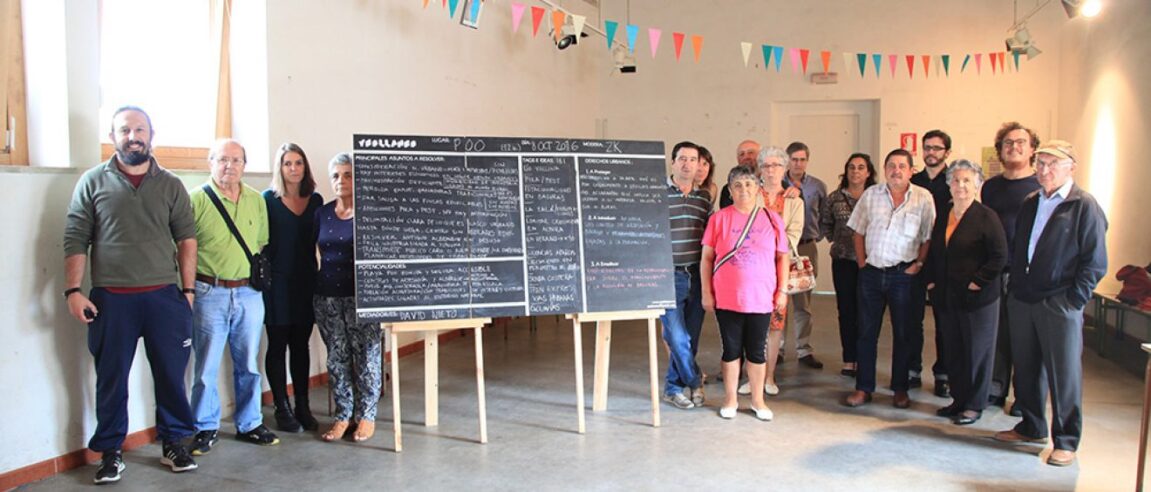
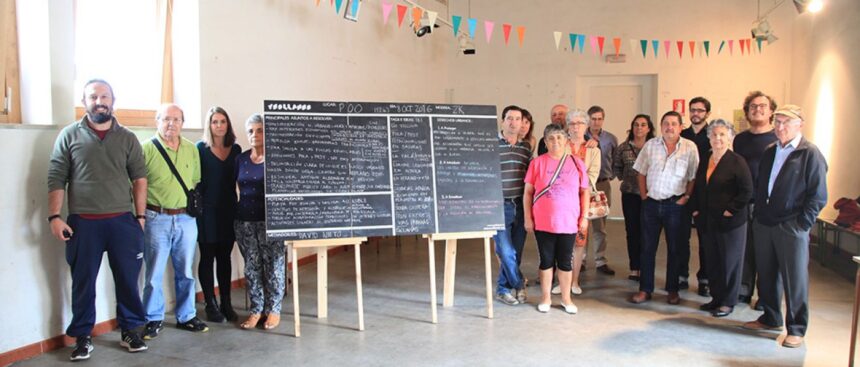
8 October 2016 · 12:00 h · Meeting 06/27
Venue: Covered bowling alley of Poo
Participants: 19
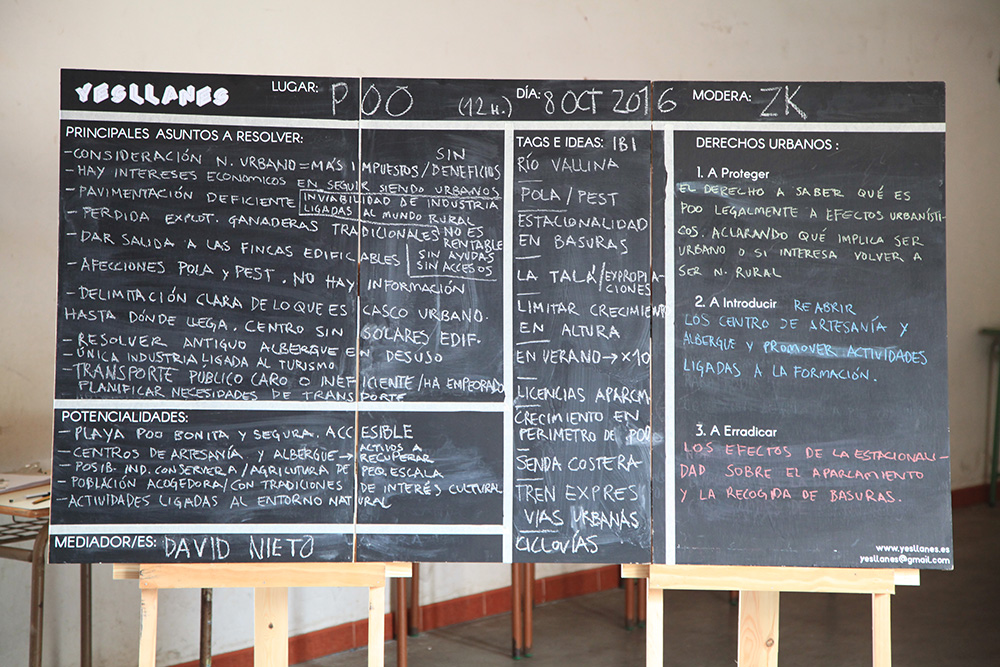
Poo was classified as an urban settlement, but the session raises a basic question: what benefits does that condition bring to those who live there? Participants point out that they pay higher taxes because they are urban, but do not receive better services.
Tourism pressure is strongly felt in summer, when the population multiplies by ten and access, roads and parking areas become saturated. This is compounded by the loss of industries linked to the rural world, which have given way to growing dependence on tourism.
The lack of information about supra-municipal rules such as POLA or PESC, and about the boundaries of the urban core, increases uncertainty. Participants also ask for a way forward for plots that were once classified as buildable.
Poo does not want to resign itself to a single model. The recovery of the old hostel and craft centre, together with possible industries linked to the sea, canning or small-scale agriculture, appears as a path towards diversification.
Key ideas
Situation: Poo pays as an urban settlement, but perceives insufficient services.
Tension: Urban classification increases burdens without resolving saturation, transport, sanitation or connectivity.
Learning: Economic diversification can build on abandoned assets and activities linked to the sea and land.
Return: Clarify urban boundaries, review services linked to property tax and study the recovery of the hostel and craft centre.
Urban beings and roles
Permanent residents: question the relationship between taxes and services.
Visitors and seasonal population: multiply pressure on access and services.
Abandoned assets: hostel and craft centre appear as dormant resources.
Sea and small-scale agriculture sectors: represent possible alternatives to tourism.
Rights to introduce
Right to services matching urban classification. Paying more should translate into better provision.
Right to clarity on boundaries and regulations. POLA, PESC and the urban core must be explained.
Right to reactivate abandoned assets. Unused facilities can generate employment and training.
Right to diversify the local economy.
Rights or situations to eradicate
Eradicate urban taxes without urban services. Classification cannot be only a fiscal burden.
Eradicate exclusive dependence on tourism. Summer should not be the only economic horizon.
Eradicate expensive and inefficient public transport. Connection is basic to everyday life.
Eradicate lack of regulatory information.
Rights to protect
Protect Poo’s welcoming character. It is a social value that should not be lost.
Protect opportunities linked to the sea and land. Canning, agriculture and training can generate futures.
Protect village scale. Urban status should not erase identity.
Protect the permanent population from summer saturation.