
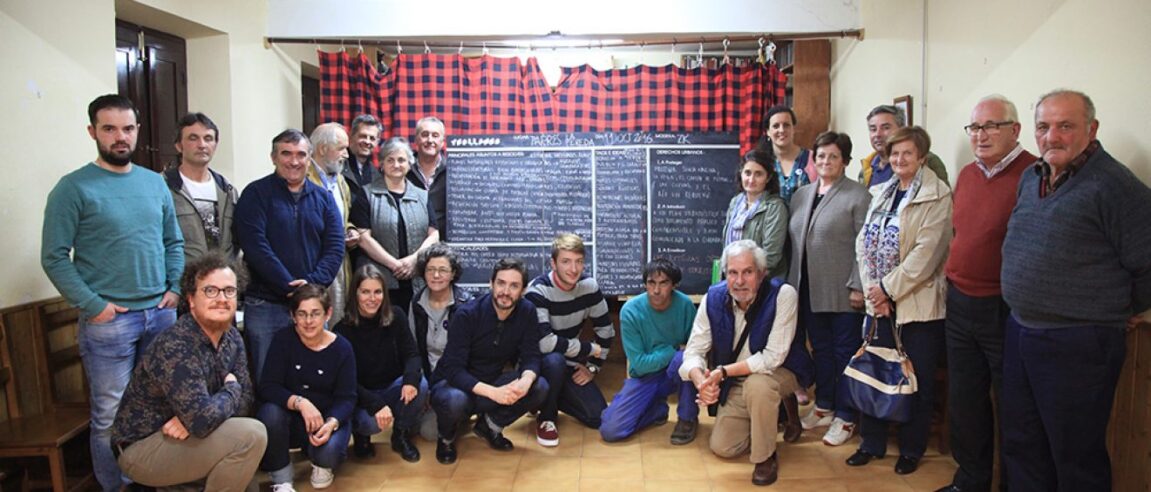
11 October · 19:00 h · Meeting 11/27
Venue: Casa de Conceyu de Parres
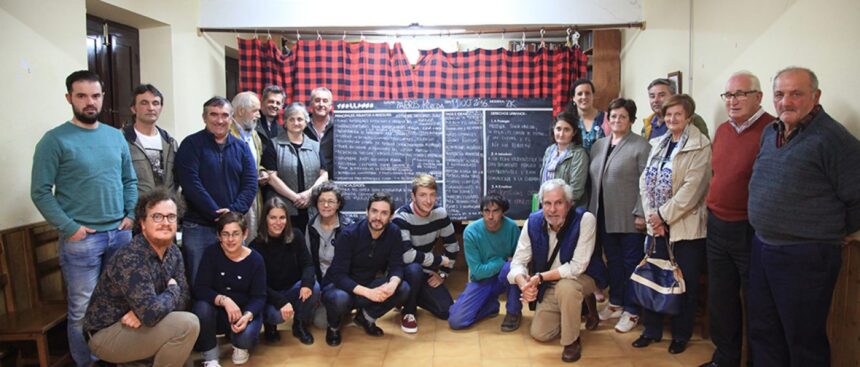
Participants: 33
Villages invited: Parres, La Pereda and Bolao.
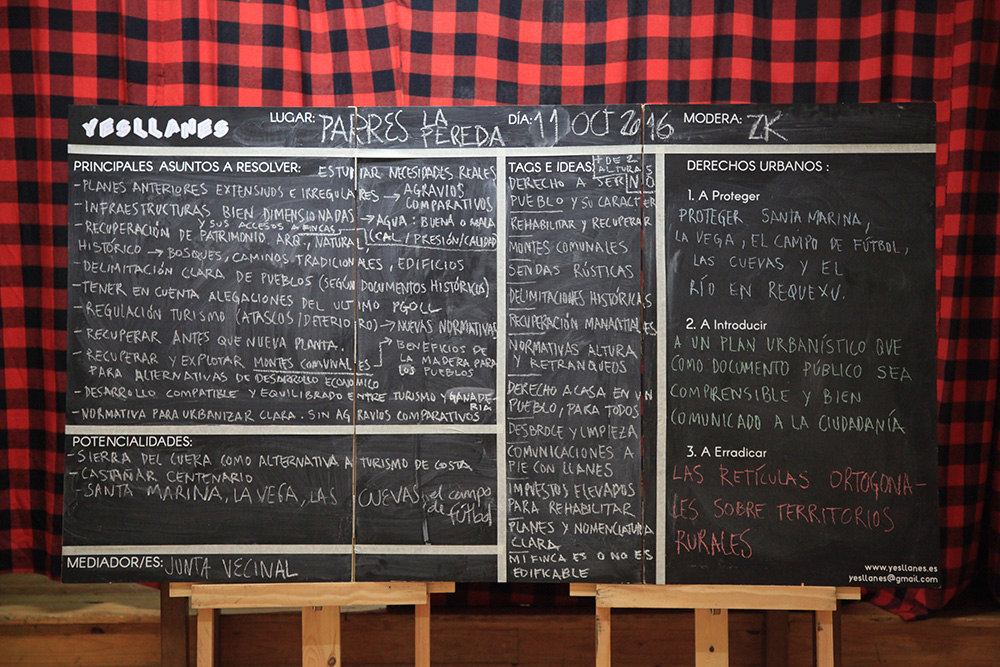
The session in Parres, La Pereda and Bolao began with a critique of previous urban plans, perceived as too extensive, irregular and a source of comparative grievances between neighbours.
The central demand is better communication between those who plan and those who live in the villages. Intentions, criteria and decisions must be explained in order to avoid distrust and the feeling of arbitrariness.
Growth is not rejected entirely, but it must respect village character. This means protecting the environment, the network of traditional paths, local architecture, building heights and original density.
The session also raises the need to make tourism and farming compatible, to recover common properties and to rehabilitate before building from scratch. Development is understood as continuity and care, not only as expansion.
Key ideas
Situation: The area rejects extensive and irregular plans that generate grievances.
Tension: Growth may be necessary, but it can break the fabric, architecture and trust if not explained.
Learning: Rehabilitation, path recovery and common land management can offer alternatives to expansive growth.
Return: Create a planning communication project and study real boundaries between villages, rehabilitation and common lands.
Urban beings and roles
Residents of Parres, La Pereda and Bolao: contribute experience of grievances, boundaries and everyday life.
Planners and administration: must explain criteria and decisions.
Farmers and tourism sector: need compatibility in order to coexist.
Common lands and properties: appear as economic and community resources.
Rights to introduce
Right to explained planning. Residents should understand criteria, boundaries and decisions.
Right to rehabilitate before building. What already exists should be considered before occupying new land.
Right to recover common lands. Common goods can generate economic alternatives.
Right to make tourism and farming compatible.
Rights or situations to eradicate
Eradicate comparative grievances. Land classification must avoid unjustified inequalities.
Eradicate extensive growth that ignores village character. Scale matters.
Eradicate the loss of traditional paths. They are territorial structure and memory.
Eradicate lack of administrative explanation.
Rights to protect
Protect village character. Fabric, paths, architecture and density are part of local life.
Protect landscape and heritage. They are not decoration, but the basis of the territory.
Protect common lands. They can sustain economy and community.
Protect neighbourhood trust. Transparency is a condition for planning.