
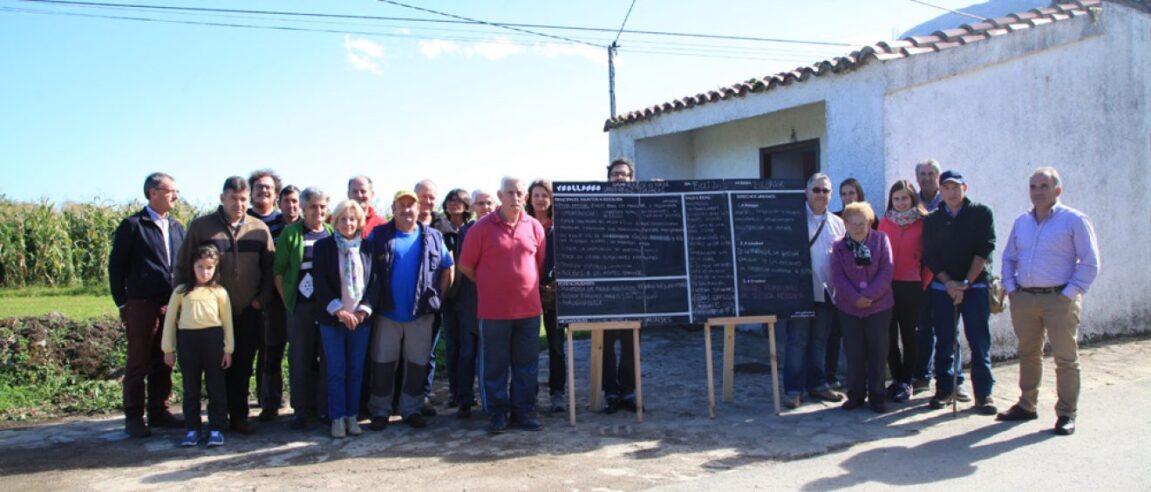
Venue: Casa de Conceyu de Turanzas, 15 October 2016 · 12:00 h
Participants: 22
Villages invited: Turanzas, Santo Toribio, Riusecu, El Toral, El Casar, La Herrería, El Allende, Puentenuevu and Torrevega.
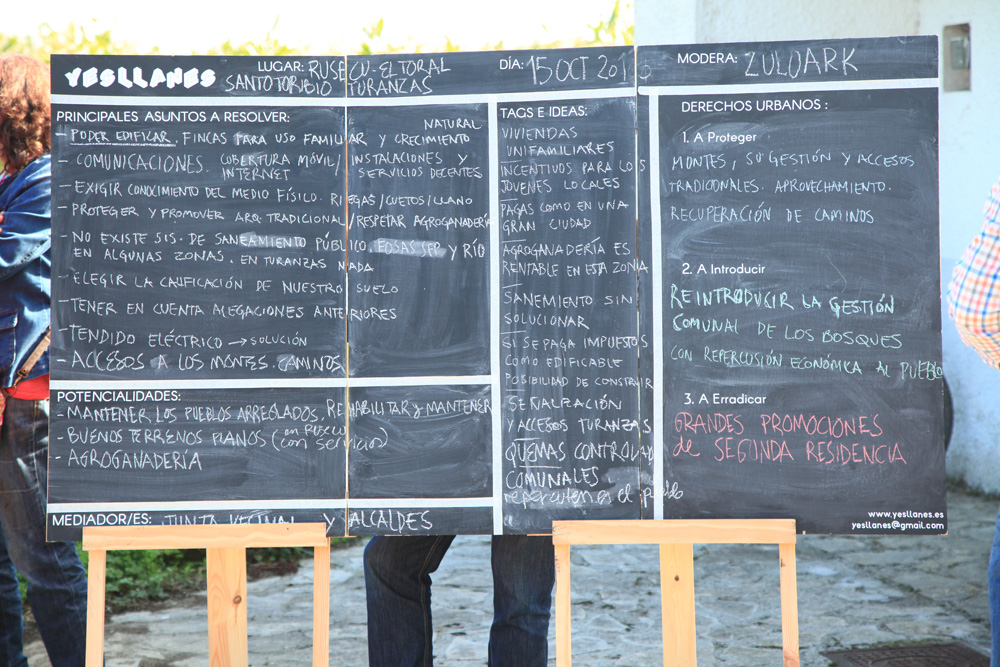
The Turanzas and Riusecu session focused on a specific criticism of previous plans: the lack of real knowledge of the terrain. Streams, hills, plains, flood-prone areas and places difficult to urbanise must form part of any decision.
Participants state that farming in this area is profitable. They therefore call for its protection through soil recovery, management of common lands and the possibility of controlled burning.
The demand to build appears in a limited form: homes on plots for family use, not large developments. Housing is linked to the possibility of retaining population, especially young people.
For that permanence to be possible, physical and digital connections, basic services and a fairer relationship between taxes paid and services received are also needed.
Key ideas
Situation: The area combines viable farming, service shortages and the need to attract young people.
Tension: Planning can fail if it does not recognise the terrain and real urbanisation conditions.
Learning: Family housing, connectivity and common land management are tools for permanence.
Return: Develop a farming and landscape protection plan, with incentives for young people and a review of services.
Urban beings and roles
Rural residents: contribute knowledge of streams, hills, paths and difficult areas.
Farmers: show that farming can still be profitable.
Young population: appears as the target of incentives, housing and connectivity.
Common lands: are productive, environmental and community resources.
Rights to introduce
- Right to planning based on knowledge of the land. Streams, hills and flood risk must shape decisions.
- Right to family housing on plots. Building to remain is not the same as building to speculate.
- Right to manage common lands. Common lands can sustain economy, landscape and community.
- Right to physical and digital connectivity. Without connections, young people cannot remain.
Rights or situations to eradicate
- Eradicate abstract planning. The plan cannot ignore the real shape of the territory.
- Eradicate paying taxes for services not provided. Charges must correspond to real facilities.
- Eradicate abandonment of mountain areas. Lack of management increases risk and loss of value.
- Eradicate rural digital disconnection. It is a direct barrier to living and working.
Rights to protect
- Protect profitable farming. It is an economic and territorial base.
- Protect common lands. They are an alternative for local development.
- Protect young people’s rootedness. Housing, services and connection must support permanence.
- Protect the physical reading of the territory. Local knowledge must enter planning.