
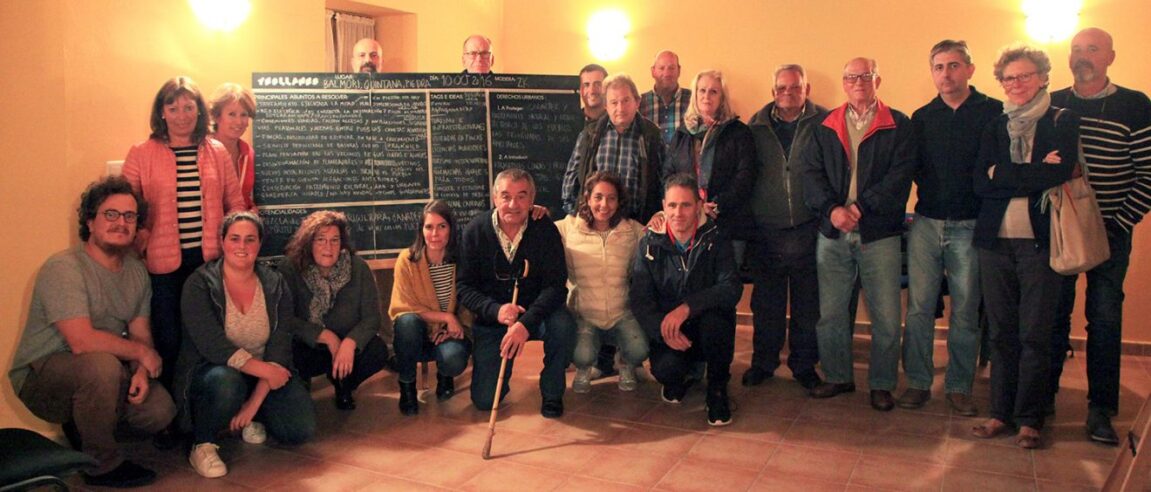
Venue: Casa de Conceyu de Balmori, 10 October 2016 · 20:00 h
Participants: 38
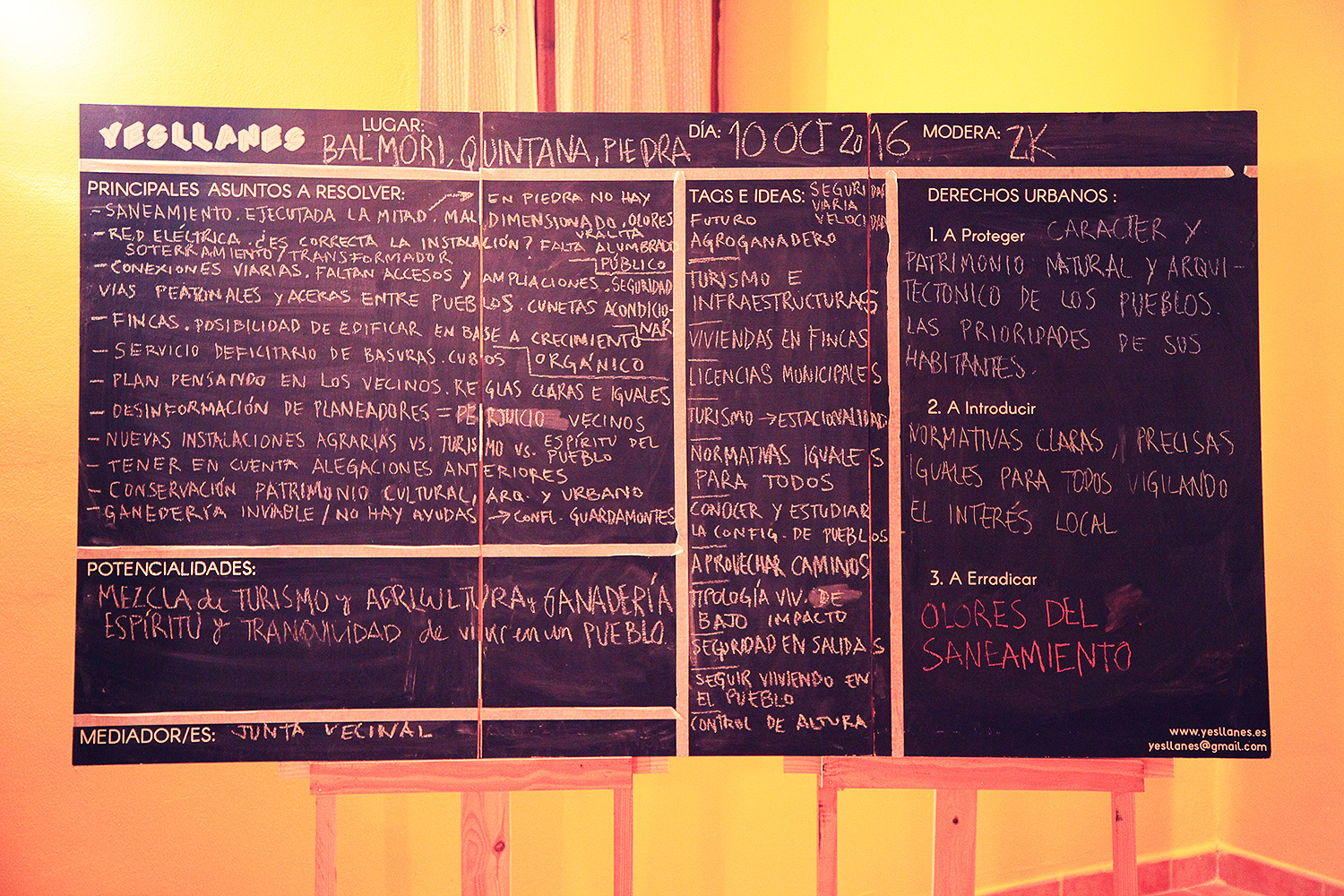
The session in Quintana, Balmori and Piedra called for an urban plan designed for year-round residents. Participants asked for equal rules for everyone and for a clearer, more accessible and more communicative administration.
The conversation placed particular emphasis on how difficult, lengthy and costly it is to start changes or works on family properties. In many cases, these works aim at something concrete: providing housing for local young people on family land.
The tension between tourism, second homes and loss of local identity appears again. Tourism growth can generate activity, but it can also weaken rural livelihoods and make it harder for local people to remain.
The underlying proposal is to focus on infrastructure, services and a smooth communication channel with the administration, with clear rules, equal treatment and protection of the common interest.
Key ideas
Situation: The villages call for a plan designed for year-round residents and local young people.
Tension: Tourism and second homes can displace identity, rural livelihoods and possibilities of rootedness.
Learning: Family housing for young people requires clearer, more accessible and proportionate procedures.
Return: Create a stable administrative communication channel and prioritise services, infrastructure and equal rules.
Urban beings and roles
Year-round residents: should be the starting point of the plan.
Local young people: represent generational continuity and the right to remain.
Families with plots: seek to enable non-speculative housing.
Municipal administration: must explain rules, procedures and decisions equally.
Rights to introduce
Right to a plan centred on year-round residents. Year-round life should be the reference.
Right to housing for local young people. Family plots can help retain population.
Right to accessible procedures. Bureaucracy should not block life projects.
Right to smooth communication with the administration.
Rights or situations to eradicate
Eradicate lack of administrative information. Without information, processes become unfair.
Eradicate long and costly procedures without proportionality. Family housing should not be treated as a major operation.
Eradicate loss of identity through tourism and second homes. Development cannot empty the meaning of the place.
Eradicate unequal rules. Equal treatment is a central demand.
Rights to protect
Protect the life of year-round residents. They sustain the village.
Protect livelihoods linked to the land. Their loss reduces economic diversity.
Protect the common interest. Rules must safeguard collective benefits.
Protect young people’s possibility of rootedness.