
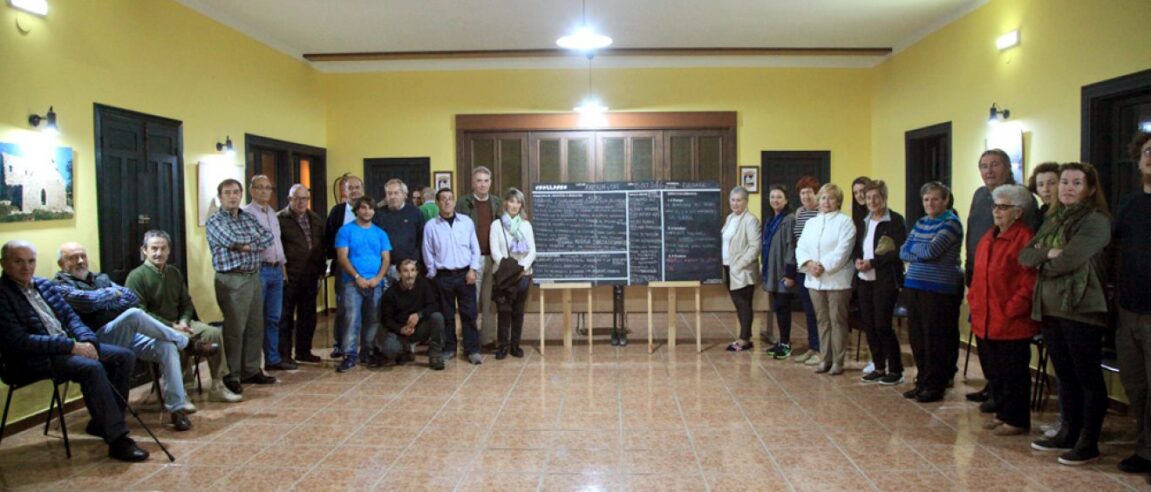
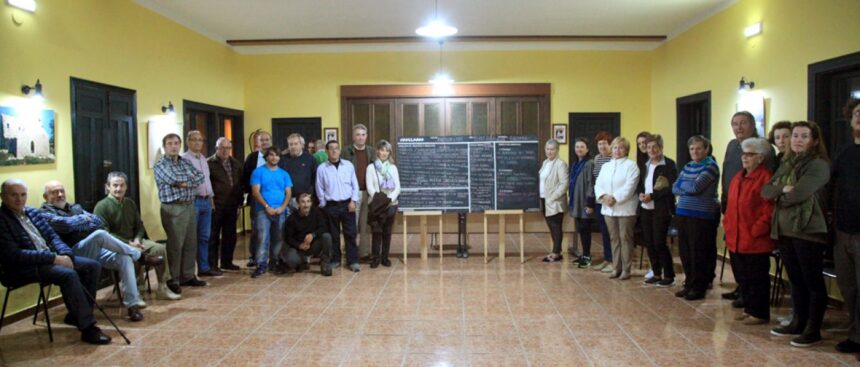
Venue: Casa de Conceyu de Andrín, 15 October 2016 19:30 h
Participants: 43
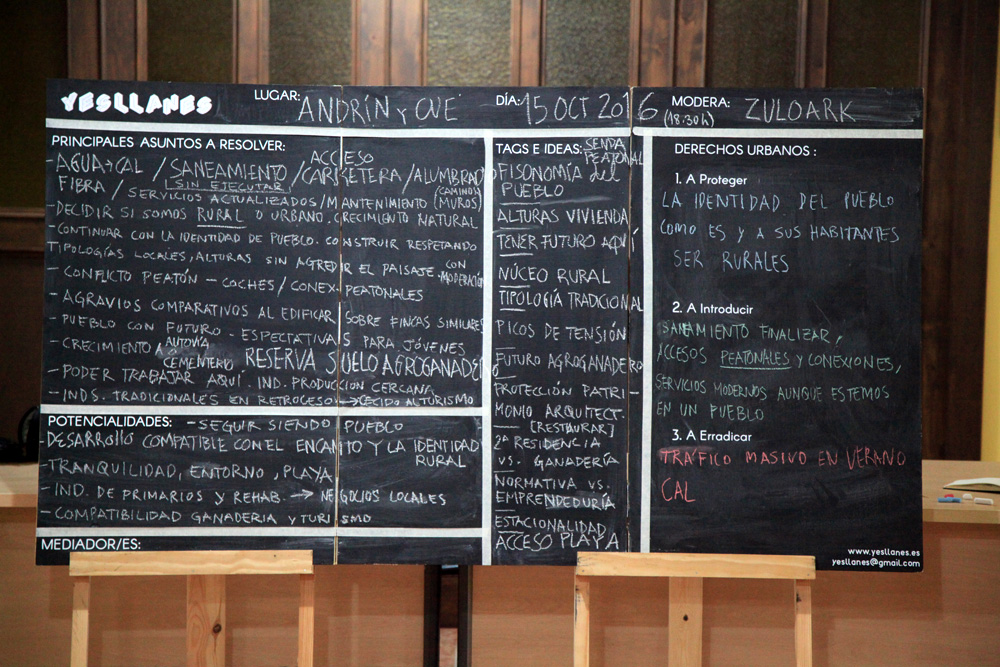
The meeting in Cué and Andrín was shaped by a fundamental question: whether it is more convenient for them to be considered rural or urban. This question comes from the distrust generated by the previous plan, where apparently similar plots received different classifications.
The appearance of arbitrariness becomes a central problem. Participants are not only asking for a category, but for an explanation of how decisions are made, why one plot can be built on and another cannot, and what each classification implies.
The area is otherwise described as a place where people live well and peacefully, with nearby beaches and a village spirit. The community wants to maintain typologies, heights and rural character, without giving up updated services, especially during the summer months.
The high number of second homes introduces a tension with farming activity. The session proposes addressing this through understanding, clear rules and compatibility between those who live, work, rest or visit the same territory.
Key ideas
Situation: Cué and Andrín combine tranquillity, nearby beaches, second homes and farming activity.
Tension: The doubt between rural and urban status becomes sharper when classifications appear arbitrary.
Learning: Coexistence between farming, tourism and second homes requires clear rules and spaces for understanding.
Return: Create neighbourhood communication plans explaining land classification, services, boundaries and growth criteria.
Urban beings and roles
Permanent residents: defend services, tranquillity and village spirit.
Second-home residents: form part of the territorial reality and create new coexistence needs.
Farmers: represent an activity that must be made compatible with residential and tourist uses.
Planning administration: must explain criteria and reduce perceived arbitrariness.
Rights to introduce
- Right to understand land classification. Being rural or urban must be explained with clear consequences.
- Right to equal criteria. Similar plots should not receive different treatment without justification.
- Right to make uses compatible. Farming, permanent housing, second homes and tourism need shared rules.
- Right to new compatible businesses and industries. The village can update itself without losing character.
Rights or situations to eradicate
- Eradicate planning arbitrariness. Lack of explanation generates distrust and conflict.
- Eradicate unmanaged incompatibility between farming and second homes. Coexistence needs rules and mediation.
- Eradicate summer saturation without adequate services. Summer cannot overwhelm local life.
- Eradicate rules that block new activities without sufficient reason.
Rights to protect
- Protect the village spirit. Typologies, heights, tranquillity and landscape are local values.
- Protect farming activity. It must continue to have a place in the territory.
- Protect pedestrian safety and connections. Paths, pavements and access are part of quality of life.
- Protect administrative clarity. Without information, there is no trust.