
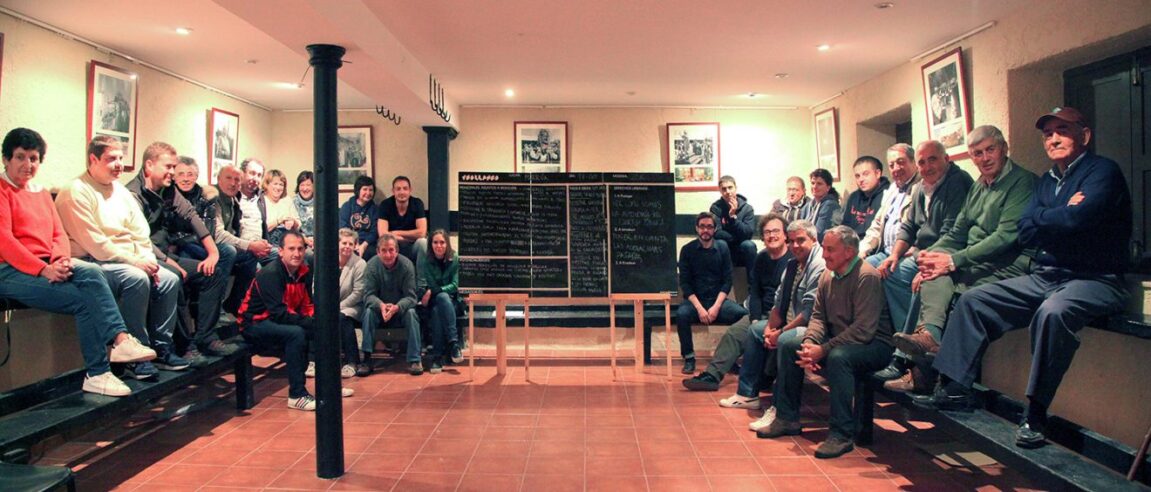
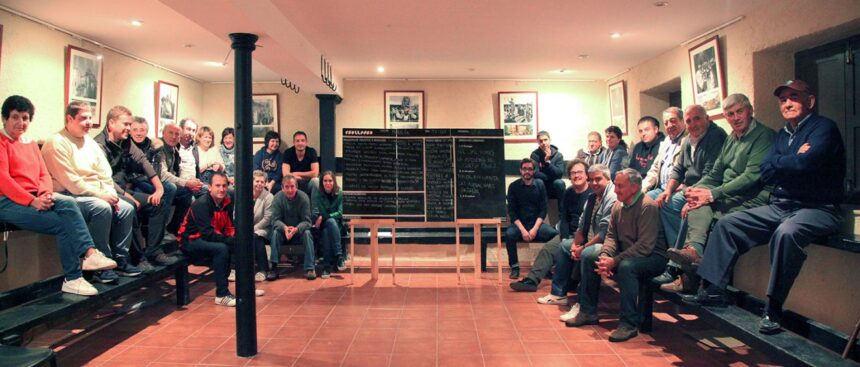
Venue: Casa de Conceyu de Porrúa, 17 October · 21:00 h
Participants: 23
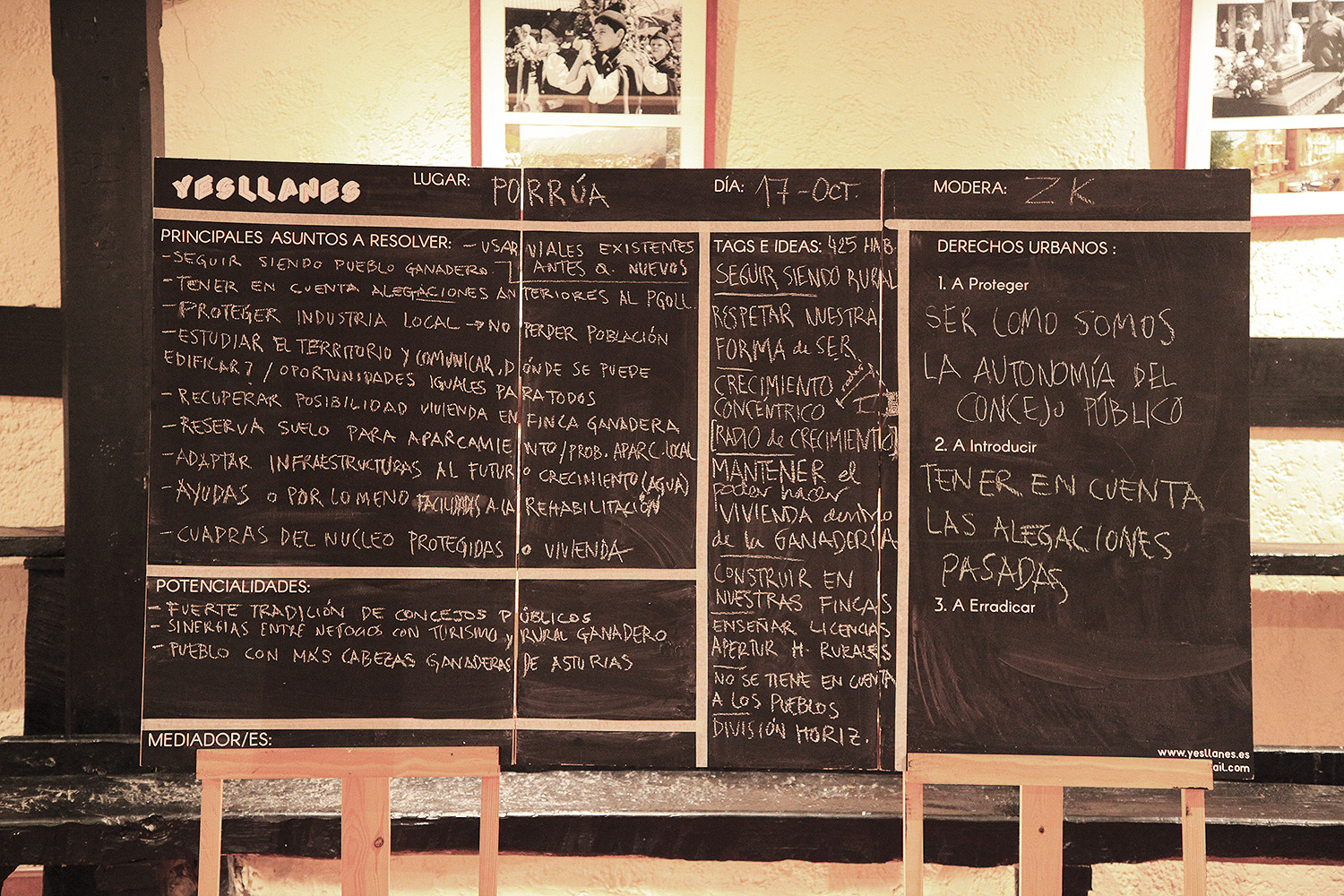
Porrúa appears as a village with a strong farming identity and a centuries-old tradition of public councils that still take place and retain some decision-making power.
The meeting was shaped by a very clear institutional demand. Some participants considered it unnecessary to explain their concerns again if these had already been included in the objections submitted to the last General Plan. What they ask for, above all, is that those objections be read and answered.
Farming activity stands at the centre of the conversation. Porrúa sees itself as a village with exceptional livestock weight and asks for this reality to have consequences in planning. Its proposal is to allow family homes on farming plots.
The underlying issue is the right to remain. This is not simply about building more, but about enabling people linked to farming to continue living in the village and sustaining an activity that forms part of its collective identity.
Key ideas
Situation: Porrúa combines strong farming identity with a tradition of local decision-making through public councils.
Tension: Residents feel they have already spoken through objections and demand a response before new processes are opened.
Learning: Housing, farming and permanence must be thought together.
Return: Formally respond to objections and study the possibility of family housing linked to farming plots.
Urban beings and roles
Porrúa public council: represents a historical form of collective decision-making.
Farmers: sustain economic activity, landscape and local identity.
Families with farming plots: express the need for housing linked to rural continuity.
Municipal administration: must recognise and answer previous objections.
Rights to introduce
Right for objections to be read and answered. Participation does not end when a document is submitted.
Right to family housing on farming plots. Remaining requires solutions adapted to rural ways of life.
Right to the autonomy of public councils. Local decision-making forms should be recognised.
Right to protect local farming. Planning must start from the activity that sustains the village.
Rights or situations to eradicate
Eradicate the sense of institutional isolation. The village should not feel that it speaks without being heard.
Eradicate rules that separate housing from rural activity. In farming villages, both dimensions are connected.
Eradicate unregulated rural tourism. Pressure on uses and housing must be organised.
Eradicate growth disconnected from the existing fabric. New roads should not replace traditional structure without reason.
Rights to protect
Protect farming as identity and economy. It is not only a productive activity, but a way of life.
Protect public councils. They are local democratic infrastructure.
Protect the possibility of remaining. People linked to the land need real conditions for permanence.
Protect the rural fabric of the village. Growth should build from what already exists.