Valle Oscuro
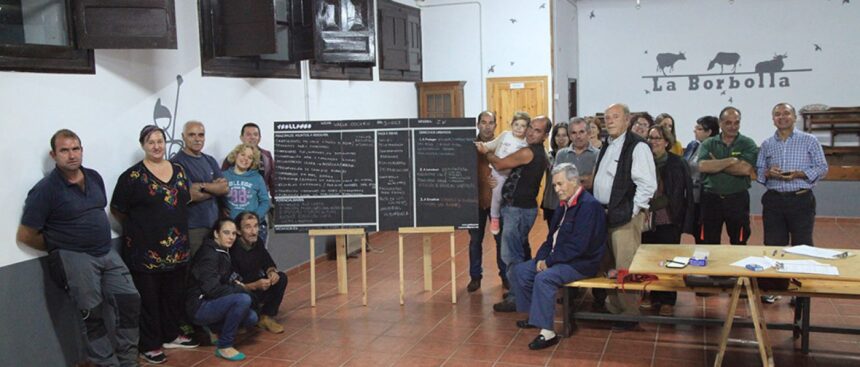
Venue: Casa Conceyu de La Borbolla
Participants: 20
Villages invited: La Borbolla, Tresgrandas, Santa Eulalia and Pie de la Sierra.
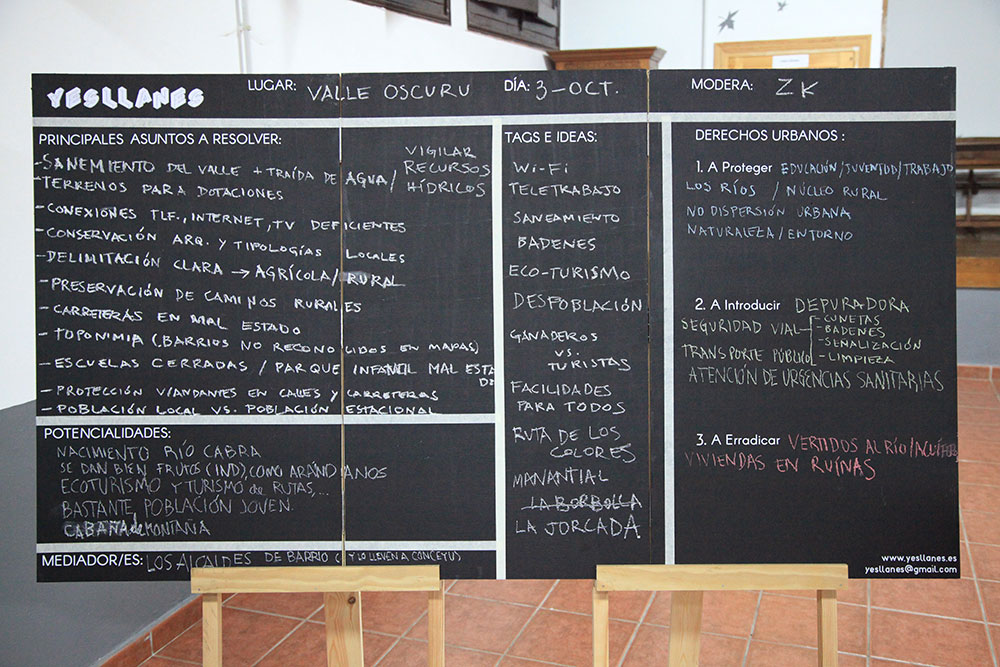
The first session of the process, held in Valle Oscuro, identified the general lack of public sanitation as the main problem. Wastewater from the villages is discharged into the environment untreated, creating an environmental, health and territorial dignity issue.
Participants also asked for drinking water supply to be improved and water resources to be monitored. In a relatively isolated valley, water, sanitation and access are not separate technical matters: they are basic conditions for remaining.
The conversation included other needs: emergency care, maintenance of schools and playgrounds, improvement of main access roads, preservation of rural paths and public transport adapted to the area.
This is compounded by poor digital television, internet and mobile phone service, which makes it harder to promote new local industry and retain young people. For future plans, participants asked for coherence, impartiality and clarity about which areas will be buildable, which will remain agricultural and why.
Key ideas
Situation: Valle Oscuro lacks general public sanitation and faces deficits in water, transport and connectivity.
Tension: Isolation limits services, economic opportunities and retention of young people.
Learning: Planning must recognise toponymy, paths, water resources and the real needs of the valley.
Return: Prioritise sanitation, drinking water, digital connectivity, adapted transport and updated toponymy.
Urban beings and roles
Valley residents: contribute knowledge about water, paths, neighbourhoods and everyday needs.
Young population: represents the possibility of new local industry and demographic continuity.
Water resources: rivers, springs and water supply systems are vital infrastructure.
Schools and playgrounds: appear as facilities that sustain community life.
Rights to introduce
Right to public sanitation. No village should discharge wastewater untreated into the environment.
Right to safe drinking water. Water supply and resources must be monitored.
Right to digital and mobile connectivity. Internet and phone coverage are infrastructure for permanence.
Right to complete maps and recognised local place names.
Rights or situations to eradicate
Eradicate untreated discharge. The valley cannot bear the lack of sanitation.
Eradicate digital disconnection. Without connection, opportunities close.
Eradicate lack of adapted transport. Rural mobility needs its own solutions.
Eradicate incomplete cartography. If a place is not on the map, it is left out of planning.
Rights to protect
Protect water resources. They are essential for health, economy and everyday life.
Protect schools, playgrounds and facilities. They sustain community life and family rootedness.
Protect rural paths and access roads. They connect villages and support everyday uses.
Protect the possibility of new local industry. Especially for young people.