
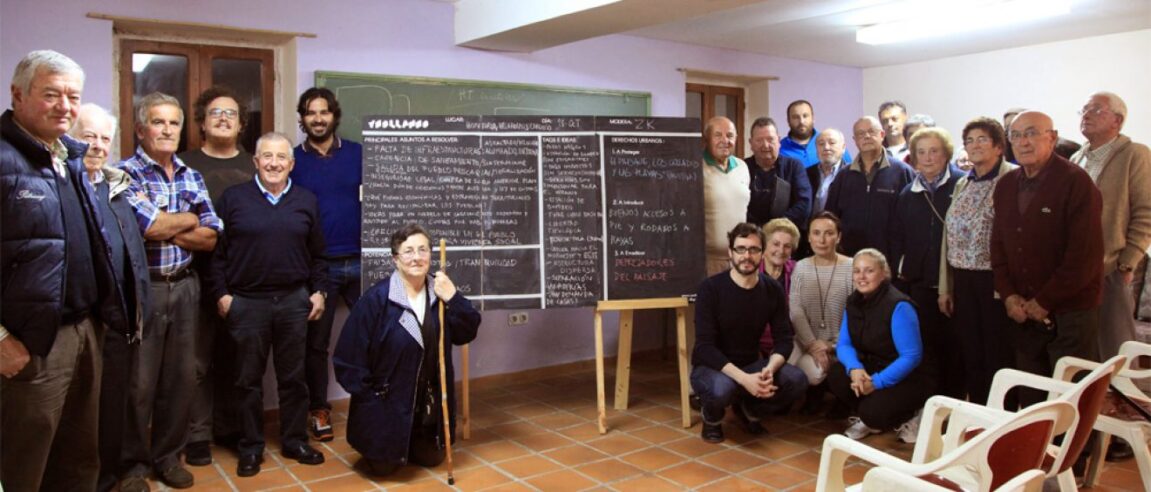
The session in Hontoria, Villahormes and Cardoso captured one of the most explicit controversies of the process: the tension between preserving traditional building typologies and aesthetics, or allowing greater architectural freedom.
For some residents, maintaining traditional forms is a way to protect village identity. For others, societies change and their ways of building should also be allowed to change, provided that change responds to real needs rather than speculative dynamics.
The conversation takes place in an area that remained stuck after the slowdown of the tourism and real estate cycle. This raises a difficult question: whether to reactivate the same development scheme in the hope that it will work again, or to begin thinking about new models, with more uncertainty but perhaps better suited to the current moment.
The session does not resolve the controversy, but it makes it visible. The debate about architecture is also a debate about economy, identity, desired futures and the right of villages not to be frozen in time or transformed carelessly.
Key ideas
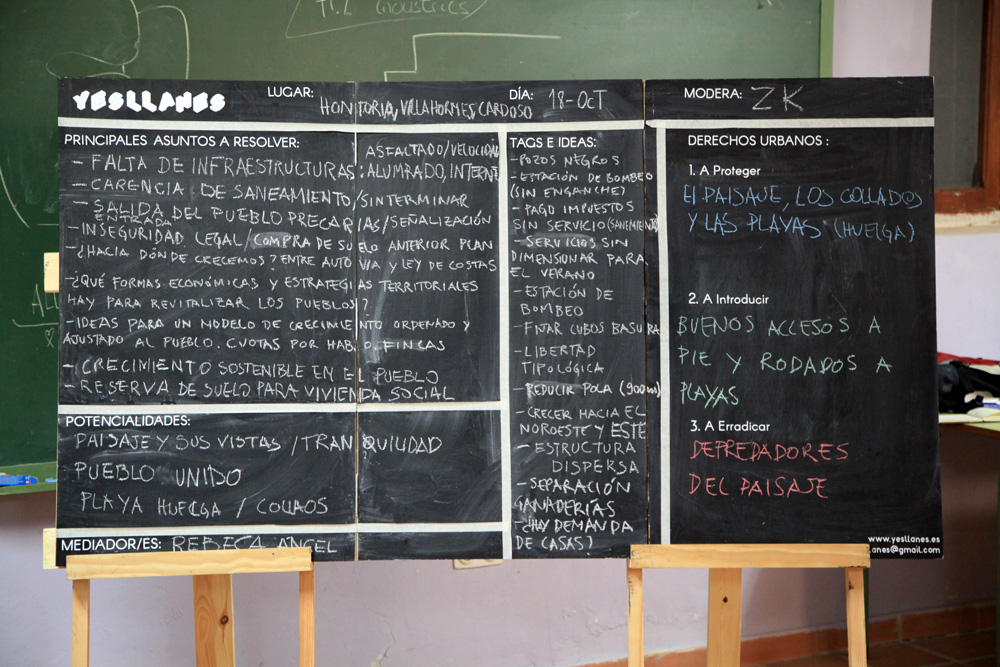
Situation: The area is blocked after the slowdown of the previous tourism-real estate model.
Tension: Preserving traditional typologies can conflict with demands for architectural freedom and social evolution.
Learning: The debate about construction is not only aesthetic; it expresses different models of the future.
Return: Open a clear process to discuss typologies, growth, services and economic alternatives before repeating previous schemes.
Urban beings and roles
Residents defending traditional typologies: protect visual identity and rural scale.
Residents supporting architectural freedom: introduce the right of villages to evolve.
Land or housing owners with pending expectations: represent projects blocked after the planning slowdown.
Planning administration: must explain criteria and avoid imposing a single idea of development.
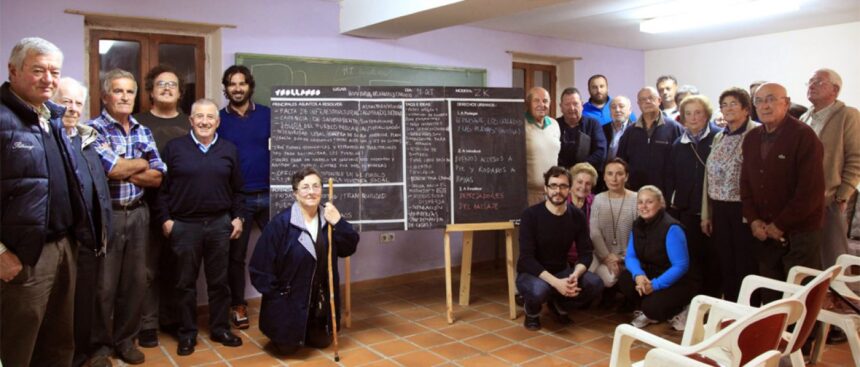
Emerging rights:
Rights to introduce
Right to debate the development model. Villages should be able to decide whether to repeat previous models or explore alternatives.
Right to evolve without losing identity. Architecture may change, but through shared criteria.
Right to understandable planning rules. Decisions on typologies and growth must be explained.
Right to revitalise villages. Blockage should not become abandonment.
Rights or situations to eradicate
Eradicate the automatic repetition of failed models. Not all tourism-real estate growth guarantees a future.
Eradicate aesthetic imposition without dialogue. Tradition should be protected with legitimacy, not only through prohibition.
Eradicate permanent uncertainty. Lack of clarity paralyses life and activity projects.
Eradicate growth without services. Basic deficits must be addressed before growth.
Rights to protect
Protect local architectural identity. Built forms sustain memory and landscape.
Protect the possibility of adaptation. Villages should not be frozen in time.
Protect landscape and tranquillity. They are central values of the area.
Protect neighbourhood deliberation. Controversies should be worked through publicly.